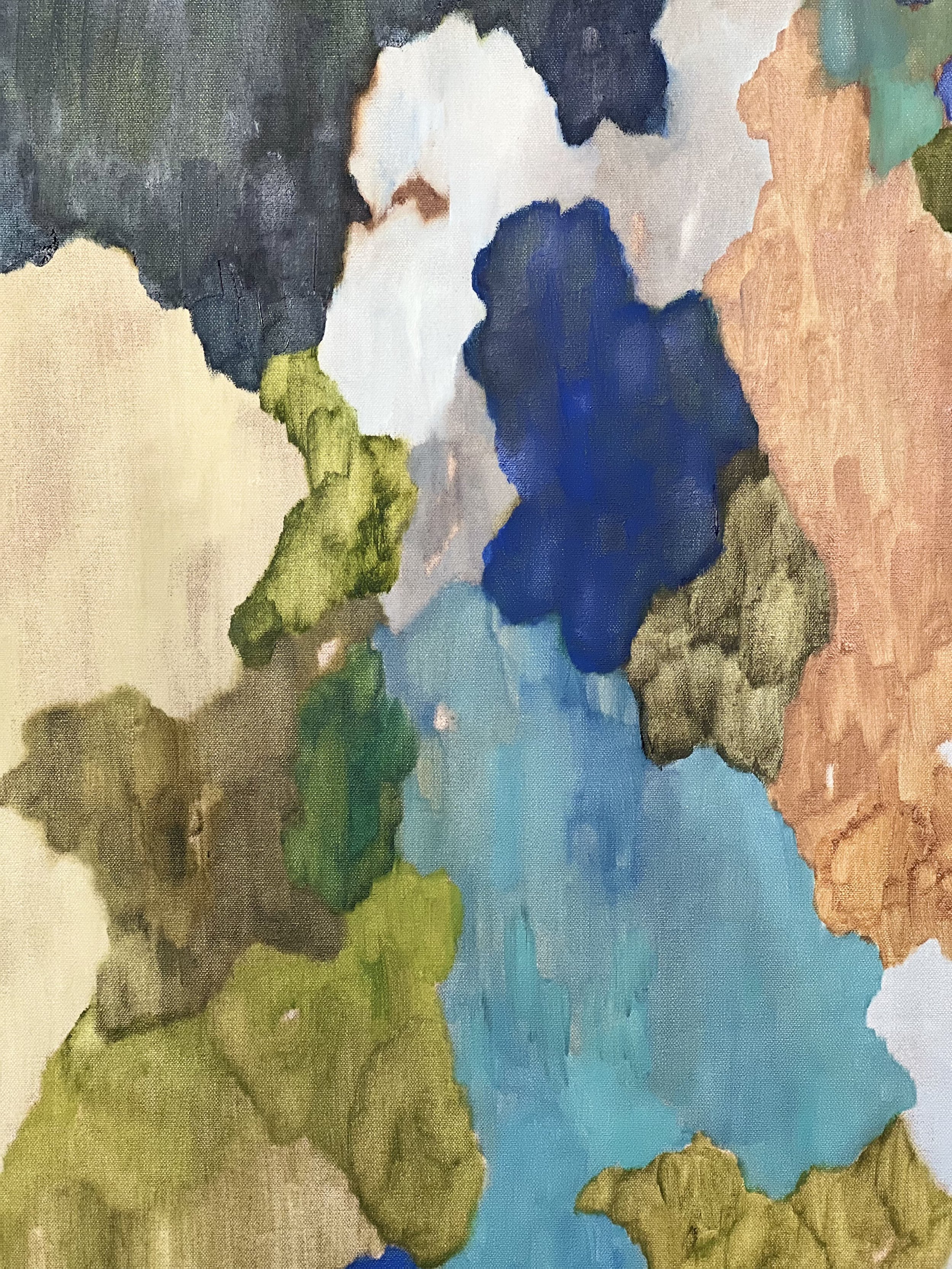
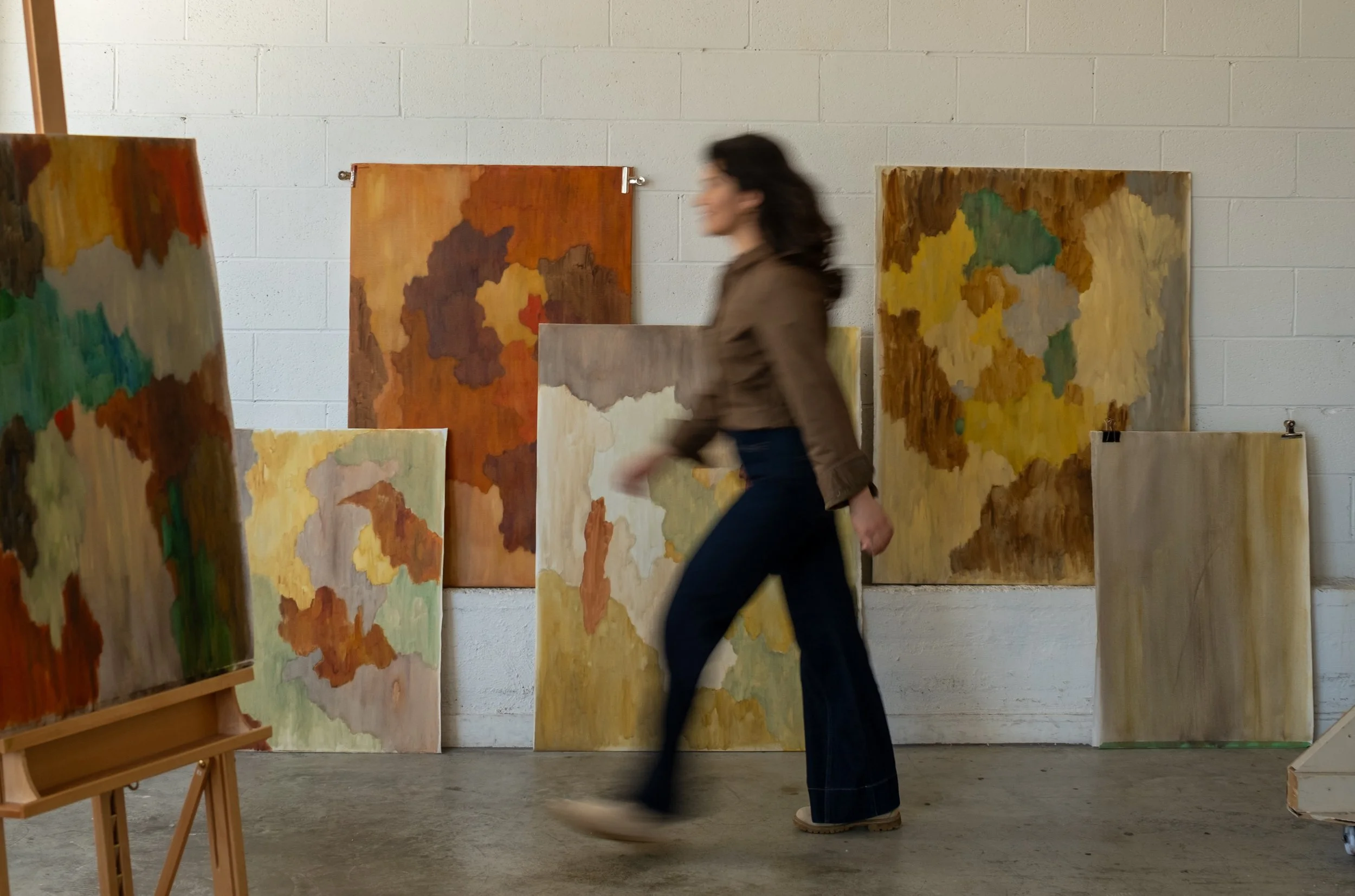
Image: courtesy of the artist
January 27 - March 20, 2026
Opening event: Friday, February 6, 5:30-7:30pm
Gallery II, 154 Angas St, Kaurna Yarta
Free entry, all welcome
-
You can find Nadera’s exhibition in The Mill’s Gallery II, located at 154 Angas St, Kaurna Yarta (Adelaide).
Gallery II is open Monday-Friday, 10am-4pm.
Accessibility
The Mill’s entrance has a small step into the building. We have a ramp available, please ring the doorbell and our friendly team will assist you.
During gallery hours, our entrance will be unlocked. If the door is closed, please ring the doorbell to alert our team.
The Mill has concrete flooring throughout with no internal steps and a disability toilet on site.
Read more in-depth information on our accessibility web page.The Mill has concrete flooring throughout with no internal steps and a disability toilet on site.
Read more in-depth information on our accessibility web page.
We are excited to present Kosh-Chenar, a new exhibition by Nadera Rasulova developed through our Visual Arts Studio Residency program, presented with support from Drs Geoff Martin and Sorayya Mahmood Martin.
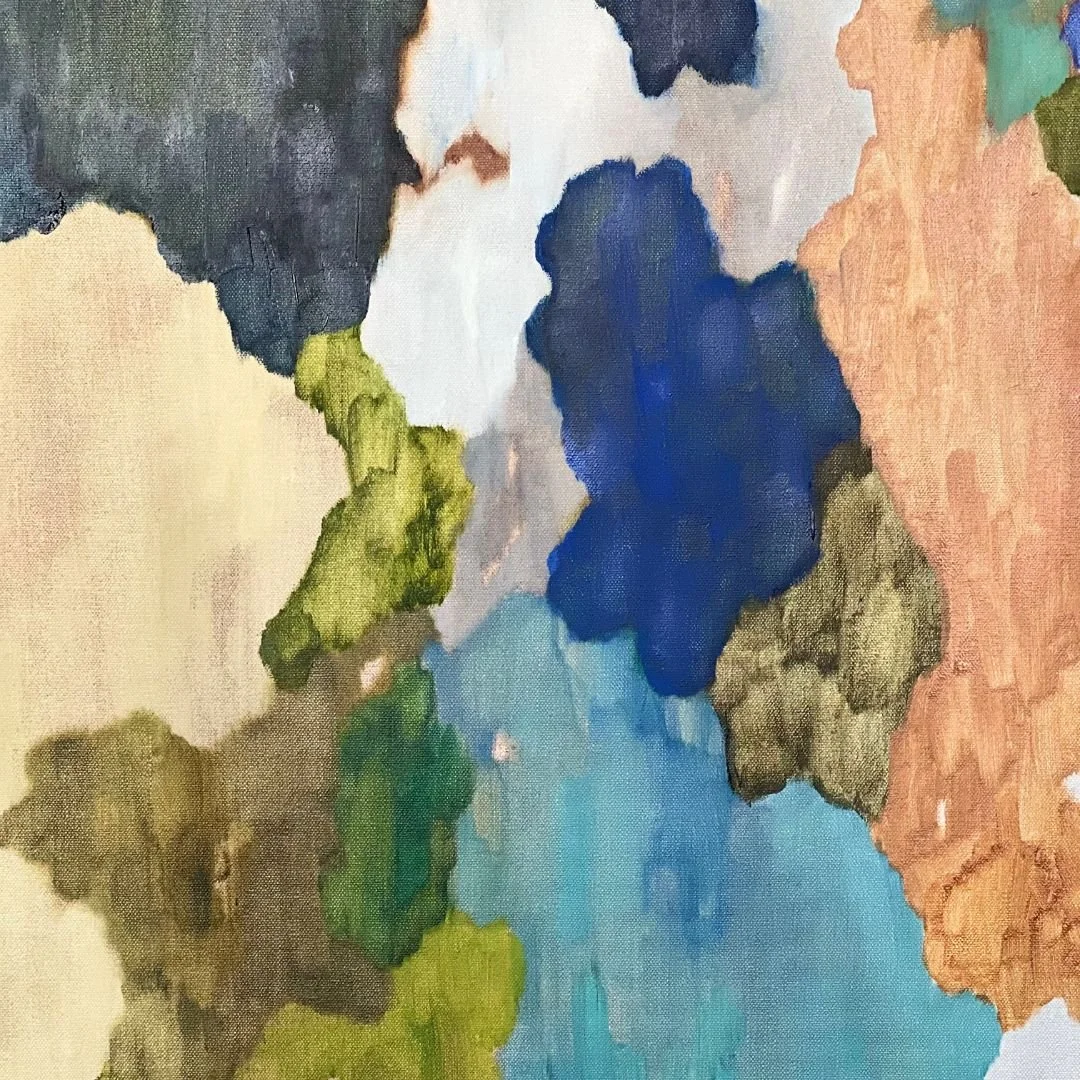
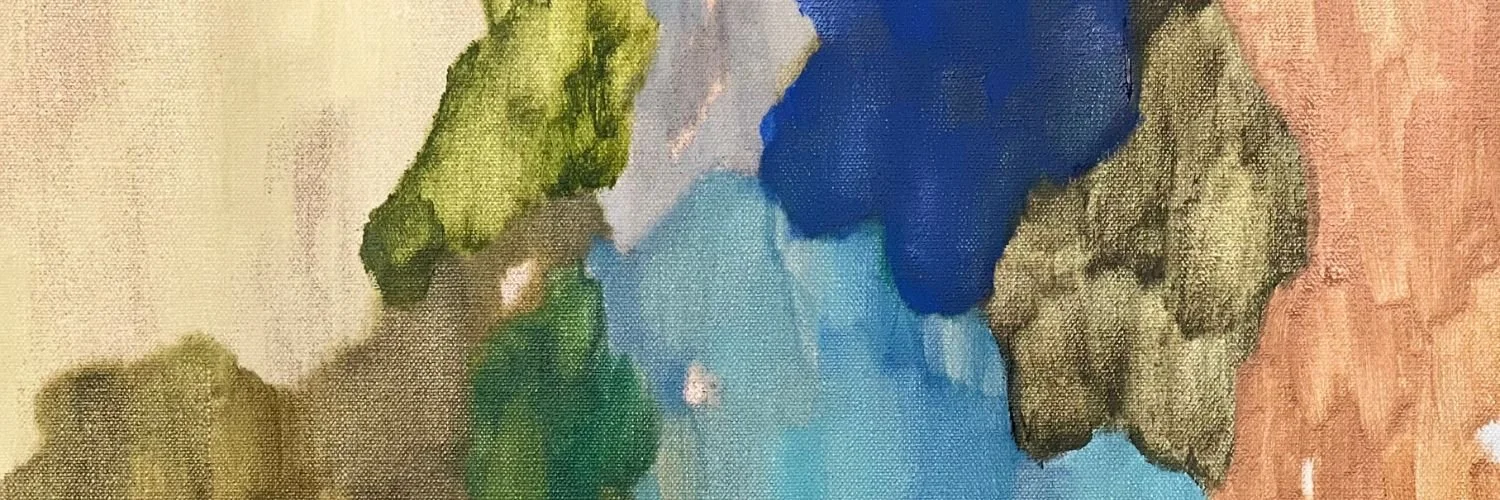
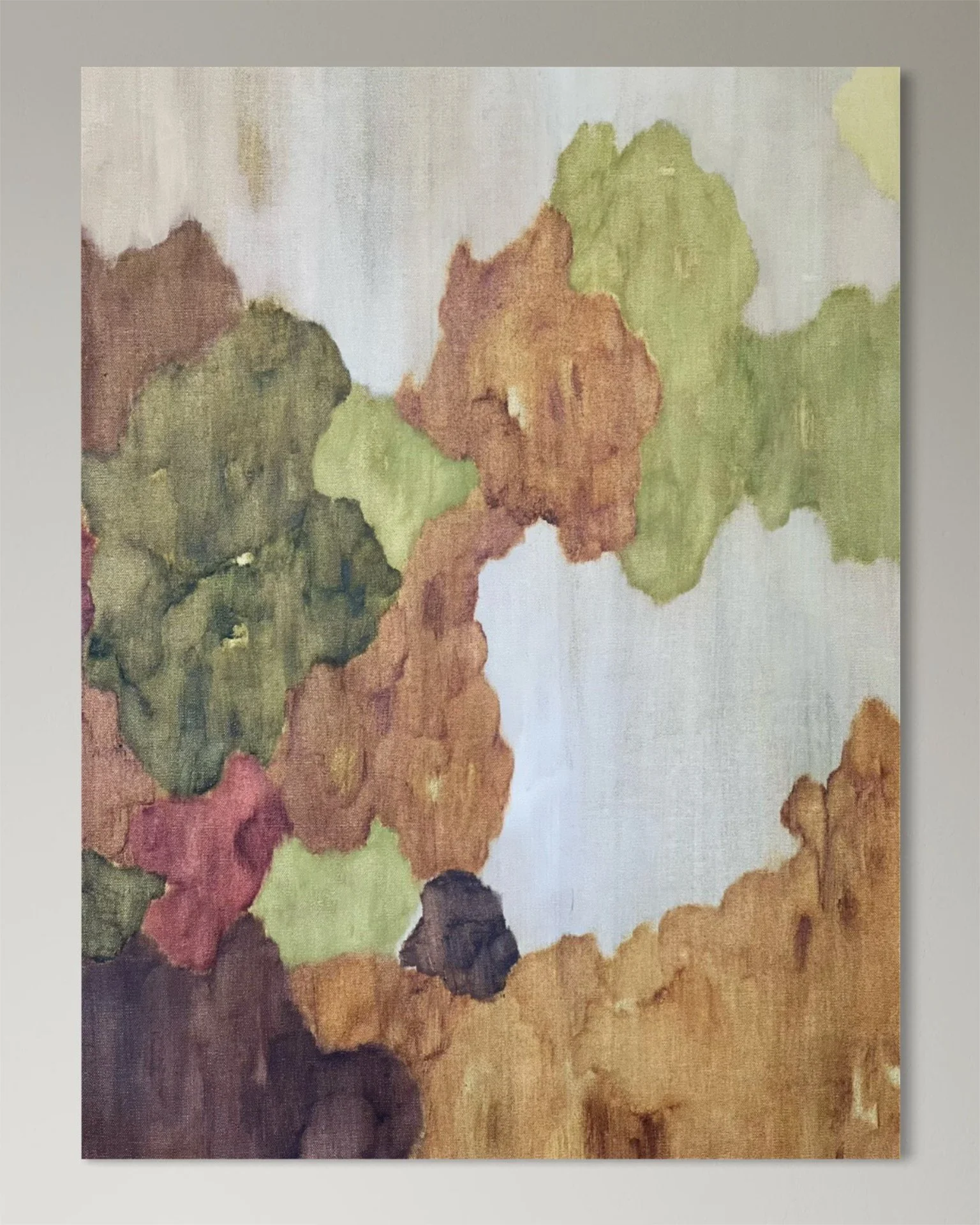
The exhibition title refers to the Uzbek plane tree, a longstanding symbol of resilience and continuity in Central Asia. Nadera draws on the cultural lineage of handwoven ikat, its motifs, colours, and tribal symbolism while reflecting both Australian and Central Asian landscapes.
Through large-scale abstract oil paintings, she examines how visual traditions migrate, adapt, and settle in new contexts. Rather than reconstructing inherited narratives, Nadera charts the points where cultural memory, place, and personal experience converge. Her palette and mark-making evoke the tonal shifts of desert light, the rhythm of woven textiles, and the layered terrain of diasporic identity.
‘It’s a conversation between inherited culture and the land I live on; a meditation on memory, belonging, and identity,’ she notes. ‘Kosh-Chenar is an exploration of the spaces we inherit and the ones we forge. It reflects the quiet work of reconciling where you come from with where you are, and finding new ground between the two.’
-
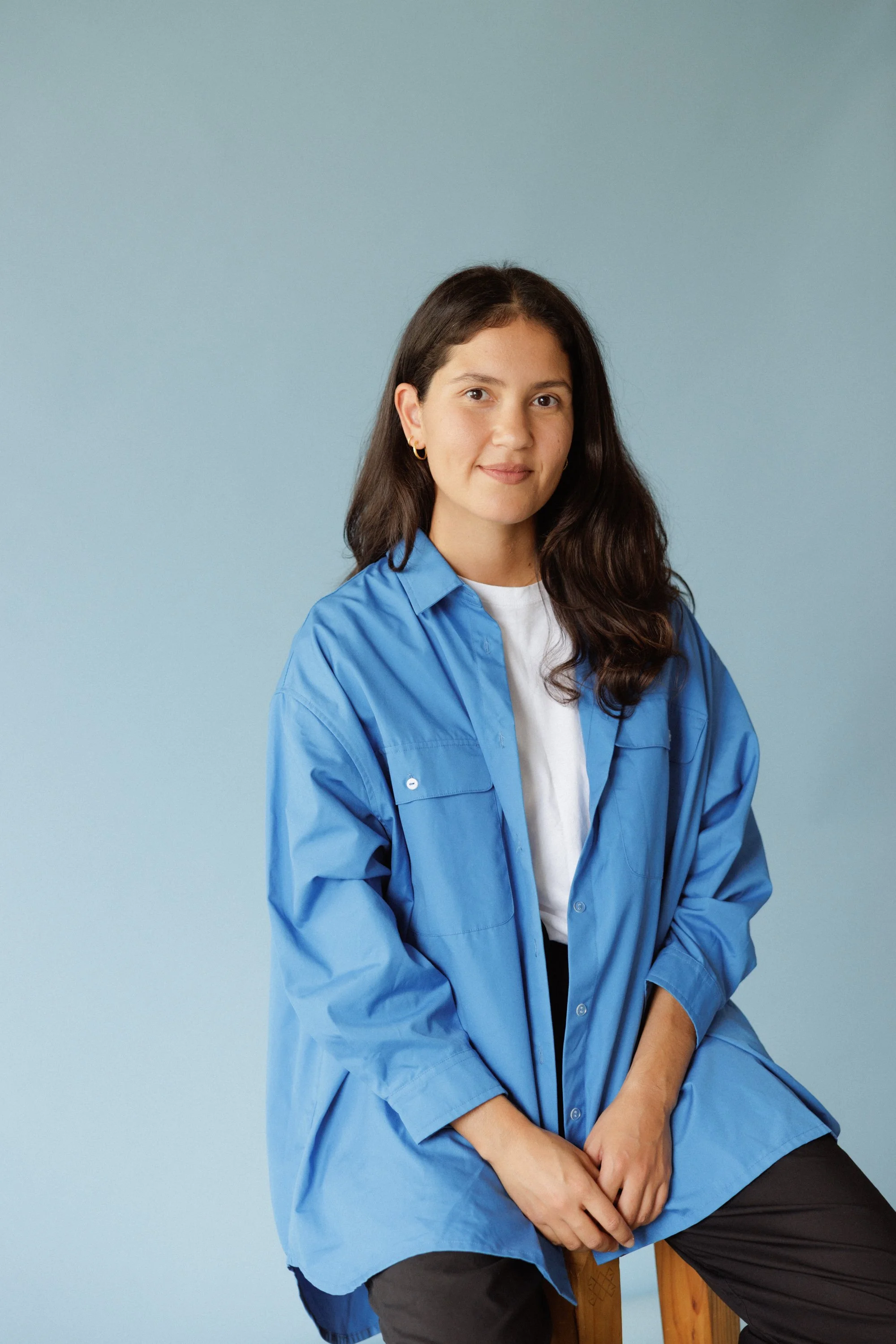
An emerging abstract artist, Nadera Rasulova’s practice investigates the intersections of cultural memory, materiality and our relationship to changing environments. Drawing on her Uzbek cultural heritage and a life shaped by migration across Australia (particularly years spent living along the NSW coastline), she explores how identity is formed through movement, landscape, and inherited visual languages.
Her work is informed not only by the rhythms and motifs of handwoven Uzbek ikat, but also by her parallel career in climate resilience and sustainability. These experiences cultivate a sensitivity to ecological systems, impermanence, and the ways in which land holds memory. This awareness manifests in her layered, textured compositions, which often unfold as abstracted landscapes built through sweeping vertical gestures.
Nadera's paintings invite reflection on how place shapes the self: culturally, emotionally, and environmentally. Through abstraction, she opens spaces for viewers to consider the shifting ground between heritage and lived experience, and the entanglement of personal and planetary change.
-
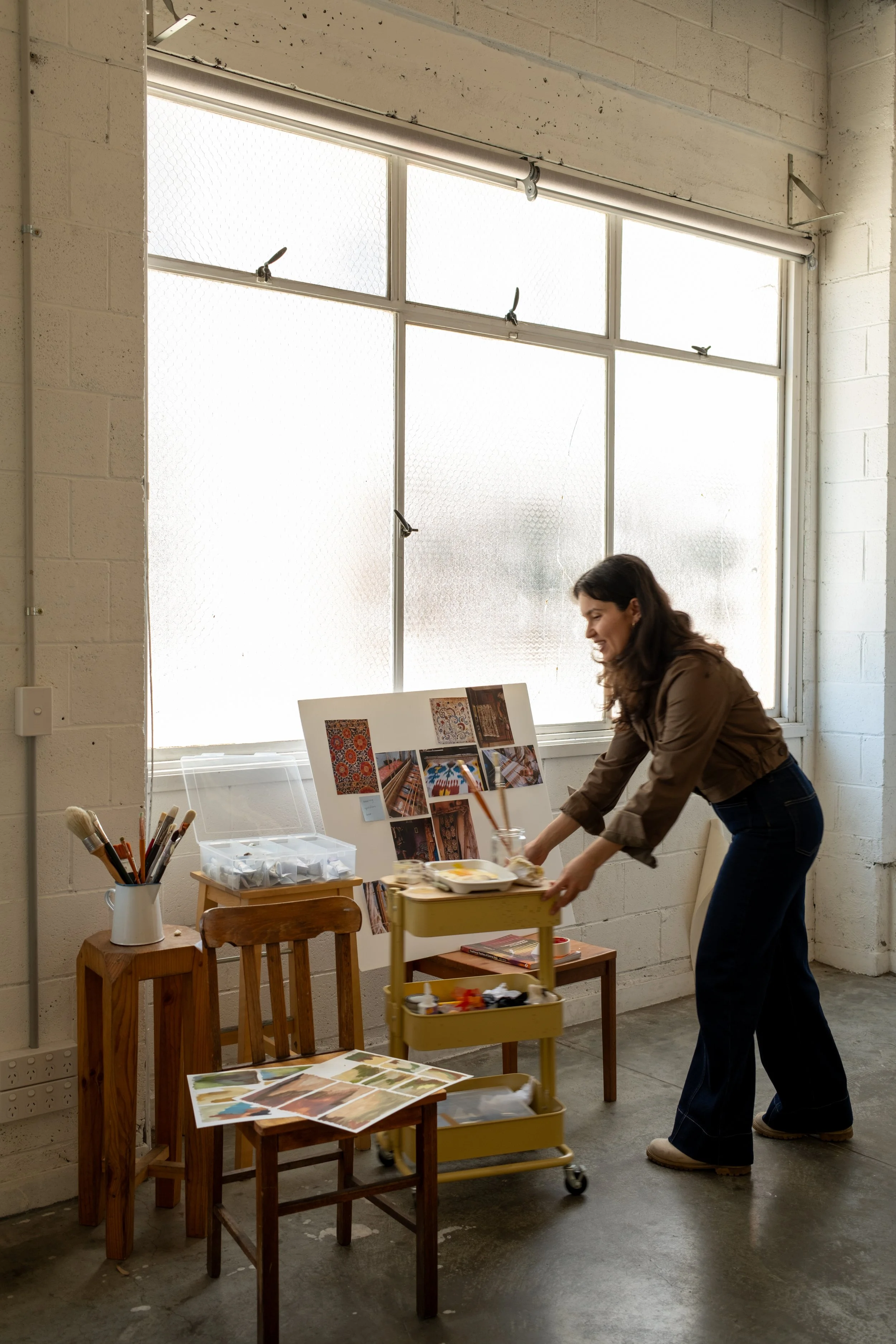
Kosh-Chenar brings together the two worlds that have shaped me: the visual traditions of my Uzbek heritage and the landscapes and rhythms of my Australian upbringing. While my practice is rooted in oil painting, the influence of Uzbek ikat runs quietly through the work, not as a technique I reproduce, but as an underlying way of seeing. The ikat pattern’s soft edges, shifting repetitions and pulsing colour transitions help guide how each painting takes shape.
I build the surfaces through vertical, layered brushstrokes. This up-and-down movement forms a kind of painted terrain, where colour settles like sediment and then rises again through new layers. The result is a topographic sense of place, but one that feels internal as much as geographic, a map of memory, emotion and cultural inheritance. I think of these works as slow accumulations, where each layer holds part of a story, even if it is later covered or transformed.
Growing up in Australia, I absorbed the openness of the landscape: the long stretches of sky, the glare of afternoon heat, colours that sit somewhere between dust and light. These tones enter the work alongside the deeper, more saturated hues I associate with Central Asia. When the two meet on the canvas, they create moments of tension and harmony, soft transitions reminiscent of ikat dyeing but filtered through the sensibility of painting and the Australian environment.
The title Kosh-Chenar refers to the traditional pairing of two plane trees in Uzbek culture. They symbolise duality, resilience and the idea of belonging to more than one place at once. That idea sits at the heart of the exhibition. Each painting is a way of holding both lineages at the same time, not choosing between them but allowing them to coexist, overlap and influence one another.
In this body of work, I am interested in how identity forms gradually, through layers that are not always visible but still shape the whole. The paintings do not offer literal landscapes or clear narratives. Instead, they invite a slower kind of looking, a chance to sit with colour, texture and rhythm and to sense what emerges between them.
Kosh-Chenar is an exploration of the spaces we inherit and the ones we create. It is about the quiet work of piecing together where you come from and where you are, and finding new ground in between.
As an extension of these themes, I will be leading a workshop during the exhibition that invites participants to bring a textile or object of cultural, familial or personal significance. These items will act as starting points for creating abstract paintings through colour, pattern, texture or a more intuitive emotional response. The workshop reflects the intentions of Kosh-Chenar: to explore how the things we inherit carry stories, and how those stories can be reinterpreted and made new through the act of painting.
This exhibition has support from