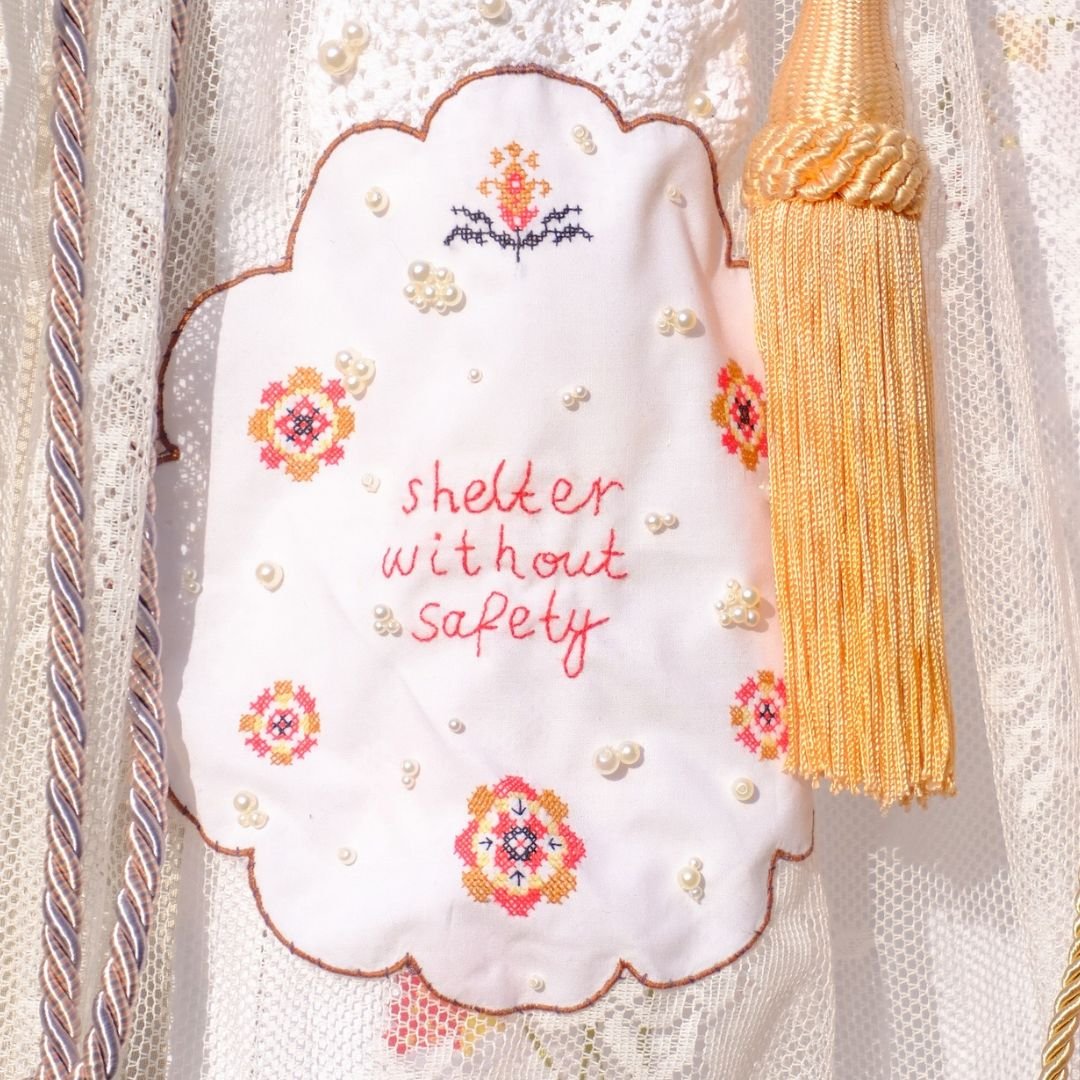
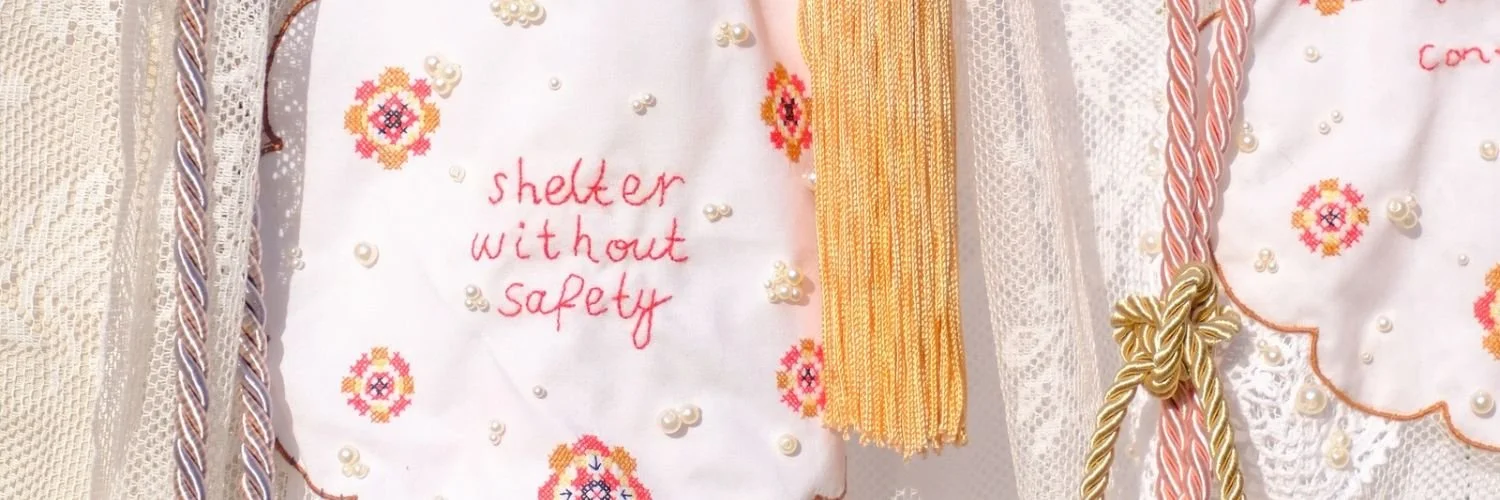
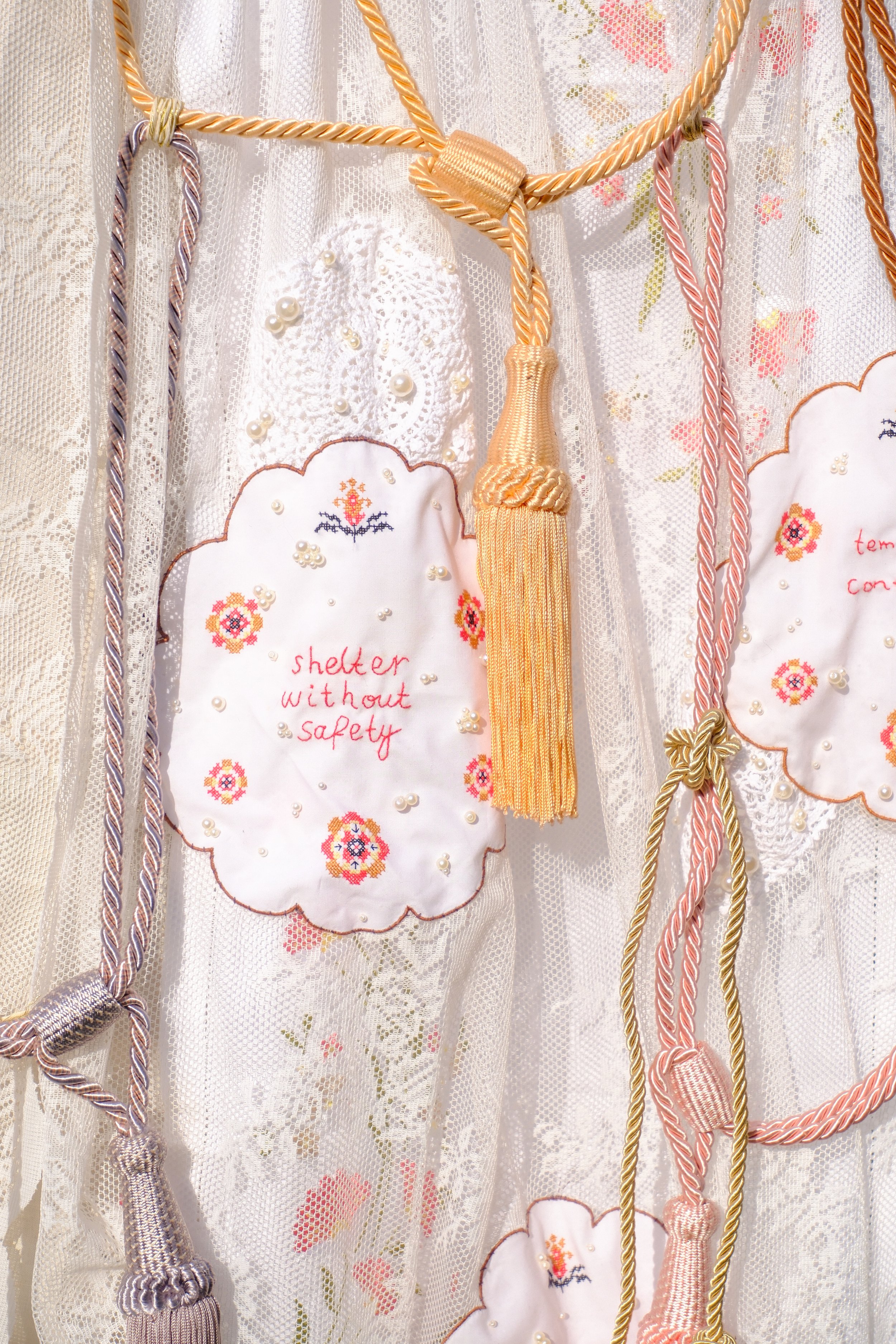
Photo: Chloe Noble, shelter without safety, 2026, courtesy of the artist.
November 19, 2026 - January 22, 2027
Opening night: Thursday, November 19, 5:30-7:30pm
Dentons, Level 1, 19 Gouger Street, Adelaide
Free entry
-
You can find shelter without safety in Dentons, located at level 1, 19 Gouger Street Adelaide.
Dentons’s galleries are open Monday-Friday, 8:30am-5pm.
Accessibility
Dentons is a legal practice with a gallery space, they have partnered with The Mill to present this exhibition.
Their entrance is via a foyer at 19 Gouger street. Inside the foyer are a bank of lifts. The gallery space is on Level 1.
During gallery hours, Denton’s entrance will be unlocked.
Dentons’ gallery has a mix of tile and carpeted flooring throughout with no internal steps and a disability toilet on site.
We are excited to present shelter without safety a new exhibition of digital drawings and textile works by Chloe Noble. This exhibition is an outcome of our Disability Access Studio, presented in partnership with The Honig Foundation and Access2Arts.
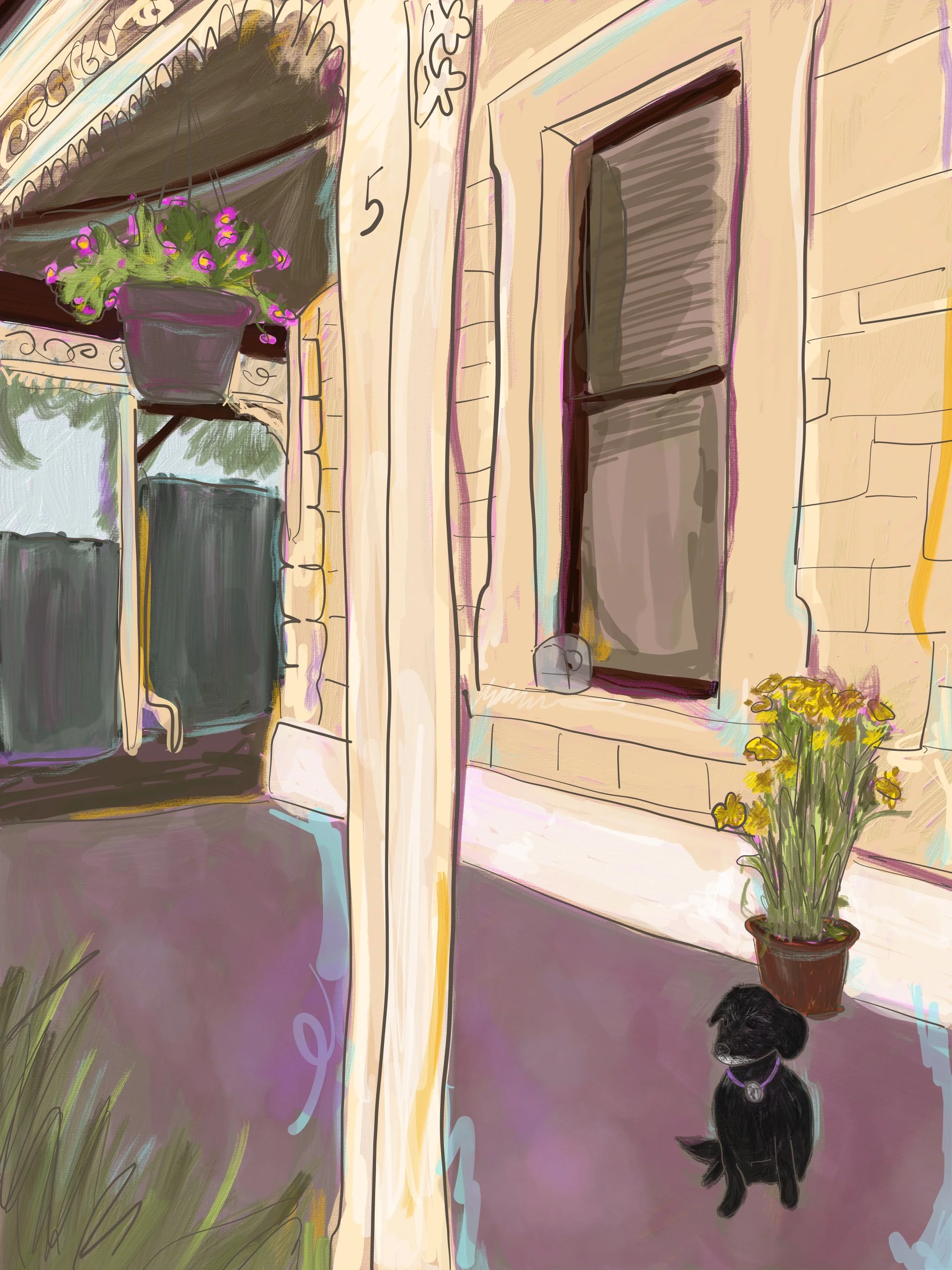
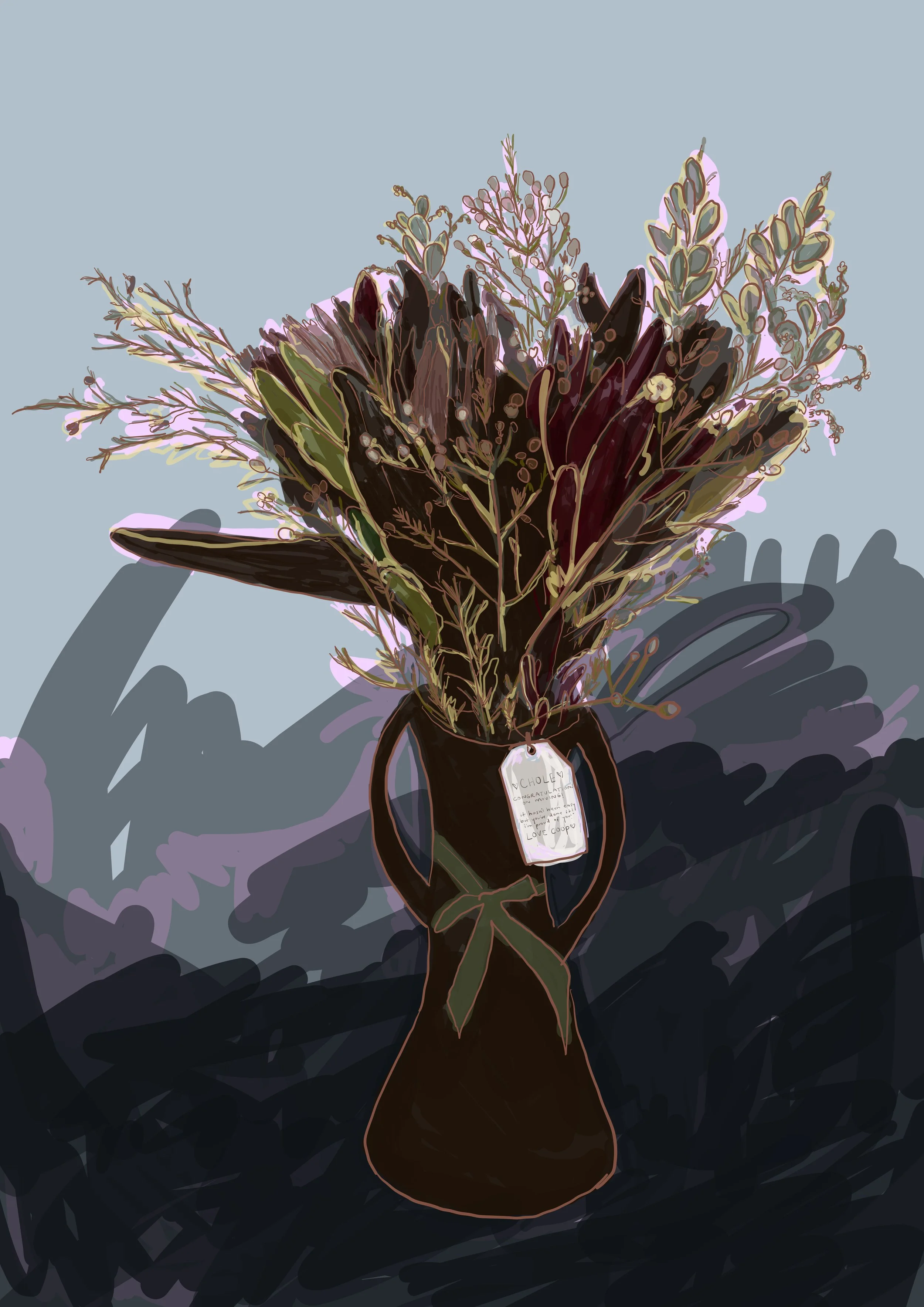
In this exhibition Chloe Noble explores their experience of housing instability, disability and trauma through a series of new mixed media works. Chloe invites audiences to consider their own experiences of housing, with digital drawings that illustrate familiar domestic scenes. Chloe’s dogs greet us from a victorian porch, a vase of native flowers is complete with a note ‘congratulations on moving’. While these familiar scenes might feel warm and nostalgic for most, the works reference Chloe’s lived experience of housing instability. In this exhibition Chloe uses materiality to speak about the embodied and experiencial, Chloe writes ‘Weight, texture, repetition, enclosure, distance and movement become ways of communicating vigilance, fatigue, disorientation and endurance. I am interested in what happens when these internal states are given a physical form, and when the materials themselves begin to carry the weight of an experience.’
-
shelter without safety explores housing insecurity, disability and trauma through lived experience. The work comes from a period in which I moved through more than twenty places over the course of a year, not through travel or choice, but in search of somewhere safe for myself and my dog.
Rather than attempting to represent this experience literally, I am interested in how it can be embodied through material, space and sensation. The work considers what it feels like to live without permanence: to be constantly assessing a room, anticipating what might happen next, adapting to other people’s expectations, and never quite knowing how long a place can remain home.
I work across painting, digital imagery, writing, textiles and installation. These materials are brought together through a shared visual and physical language of softness, fragmentation, layering and impermanence. Fabric can hang, fold, conceal and divide.
Images can overlap or become partially obscured. Soft materials sit alongside architectural forms, creating spaces that feel both domestic and unsettled, reflecting the experience of moving between places and continually adapting to them.
Materiality is important to this work because materials can hold qualities that language cannot. Weight, texture, repetition, enclosure, distance and movement become ways of communicating vigilance, fatigue, disorientation and endurance. I am interested in what happens when these internal states are given a physical form, and when the materials themselves begin to carry the weight of an experience.
The work also considers the relationship between safety and institutions. Housing, healthcare and other systems can provide forms of shelter and support while simultaneously placing conditions on who is able to access them and how. For disabled people, access can become dependent on compliance: being quiet enough, flexible enough, well enough, grateful enough, or able to minimise the complexity of our needs.
shelter without safety sits within this contradiction, questioning what it means to be given somewhere to exist without necessarily being given the conditions required to feel safe there.
I am particularly interested in the ways disabled bodies experience space differently. Fatigue, chronic illness, sensory sensitivity and trauma can change how a room is navigated, how long it can be occupied, and what is required to feel comfortable within it. These experiences inform not only the subject of the work but its making. Access is therefore embedded within the process and material language of the installation rather than added afterwards.
For disabled people, home can hold a different significance. It can be a place of rest, recovery and regulation, where the body can withdraw from the demands and sensory pressures of the outside world. Home can also be a space where routines, objects and familiar surroundings create a sense of safety and control. When that stability is disrupted, the loss is not simply the loss of a physical address, but the loss of a place in which the body can rest and exist without constantly adapting.
The work invites audiences to move through an environment that is shifting, incomplete and deliberately difficult to read as a single narrative. There is no one moment or image that explains the experience. Instead, meaning accumulates through fragments, textures, objects and spatial relationships.
At its core, shelter without safety is about the difference between having somewhere to be and having somewhere you can feel safe. It is about the physical and emotional labour of adapting to unstable environments, and the ways that experiences of housing insecurity and disability can remain hidden even when a person appears to have somewhere to live.
Through the work, I am interested in creating a space where these experiences do not need to be simplified in order to be understood. Instead, they can exist as fragmented, contradictory and embodied — held within the materials, the space and the experience of moving through it.
-
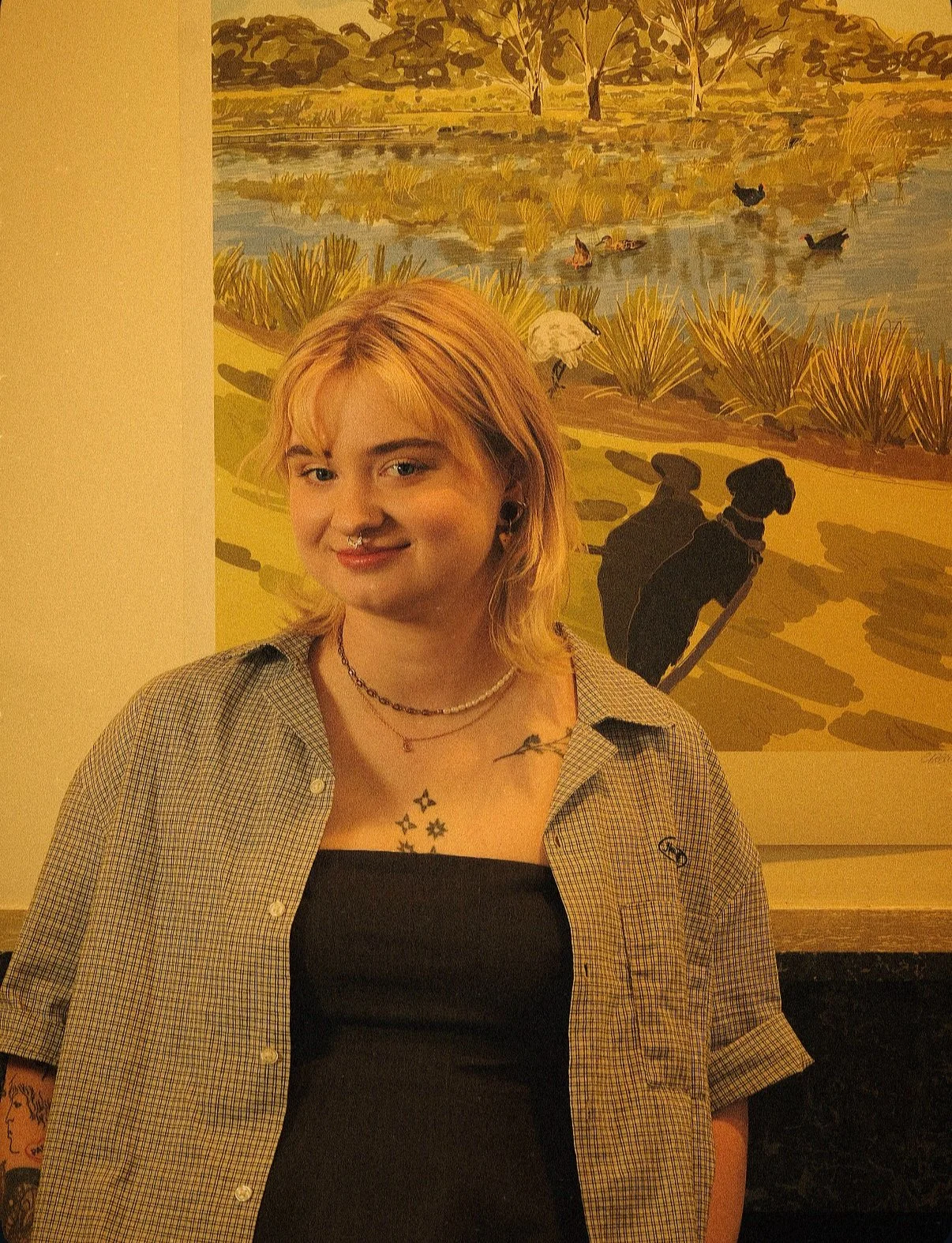
Chloe Noble (she/they/he) is a multidisciplinary visual artist, facilitator and arts worker based on Kaurna Yerta / Adelaide, and the current Disability Access Studio recipient at The Mill. They also work as an Access Assistant at Access2Arts. Their practice spans expressionist portraiture, impressionist landscapes, digital art, installation and poetry, working across watercolours, oils, acrylics and digital mediums. Through gestural mark making and vibrant colour harmonies, Noble explores memory, domesticity, identity, disability, trauma, queerness and the emotional residue held within spaces and objects. Drawing from lived experiences of disability, chronic illness and neurodivergence, their work combines personal narrative with socially engaged approaches that invite reflection, connection and dialogue.
Alongside their studio practice, Noble is deeply invested in accessibility and community-centred arts practice. Facilitation and collaborative making have shaped the way they approach art as a tool for care, participation and social change.
Noble graduated with a Bachelor of Creative Arts (Visual Arts) from Adelaide College of the Arts / Flinders University in 2019 and has worked extensively across South Australia’s arts sector in workshop facilitation, arts administration, event coordination and access-focused programming. They have previously held studio spaces at Collective Haunt Inc., Carclew and Floating Goose Studios Inc.
This project has been assisted by the Australian Government through Creative Australia, its principal arts investment and advisory body