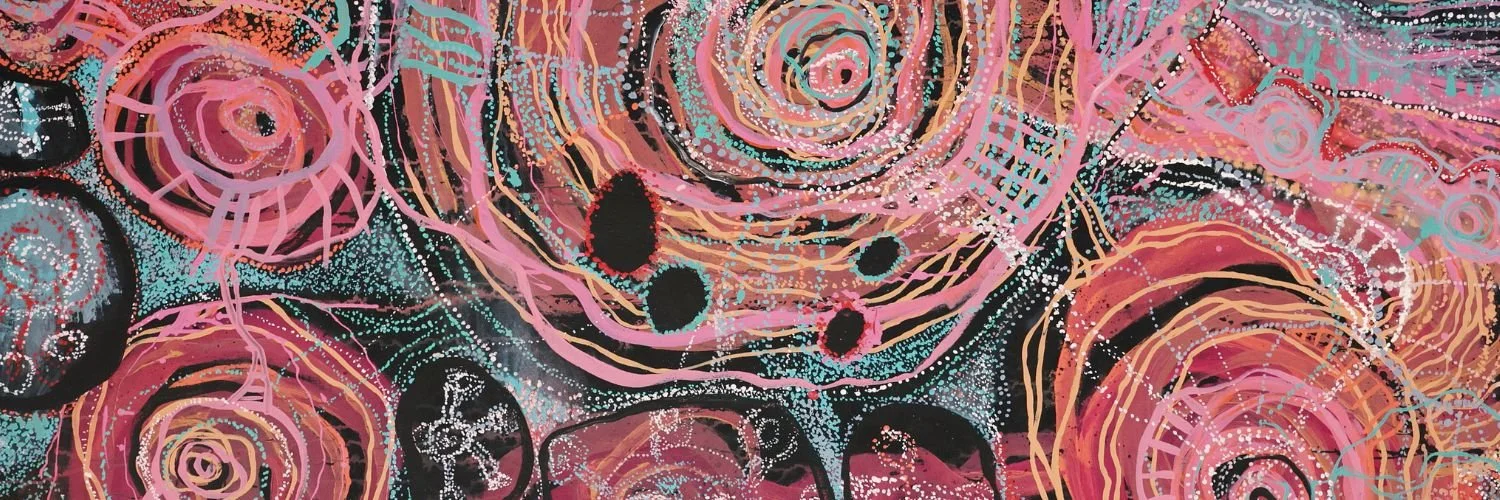
Image: Lisa Khan, Intergenerational Wealth of Knowledge (detail) Photo: courtesy of the artist
July 27 - September 4, 2026
Opening night, Wednesday, July 29, 5:00- 7:30pm
Gallery I, 154 Angas St, Kaurna Yarta
Free entry, all welcome
-
You can find Held in The Mill’s Foyer Gallery, located at 154 Angas St, Kaurna Yarta (Adelaide).
The Mill’s galleries is open Monday-Friday, 10am-4pm.
Accessibility
The Mill’s entrance has a small step into the building. We have a ramp available, please ring the doorbell and our friendly team will assist you.
During gallery hours, our entrance will be unlocked. If the door is closed, please ring the doorbell to alert our team.
The Mill has concrete flooring throughout with no internal steps and a disability toilet on site.
Read more in-depth information on our accessibility web page.The Mill has concrete flooring throughout with no internal steps and a disability toilet on site.
Read more in-depth information on our accessibility web page.
For SALA 2026 we are excited to present Held, a new group exhibition featuring new work by First Nations artists Joeulla Coulthard (Adnyamathna, Kuyani), Juanella Donovan (Adnyamathanha, Luritja and Arrernte), and Lisa Khan (Yankunytjatjara/ Antakirinja/ Pitjantjatjara). This exhibition explores the artists practices across painting, weaving, sculpture and ceramics. As mothers, each of these artist’s plays a vital role in caring for family and caring for Country. We know that mothers hold so much strength and tenderness, veracity and knowledge. These qualities are passed down through generations from mother to child, and for these women, their art practices reflect the ongoing practice of holding and sharing knowledge and stories.
This exhibition is presented with support from Ku Arts and the City of Adelaide’s Arts and Community Arts and Cultural grants.
-
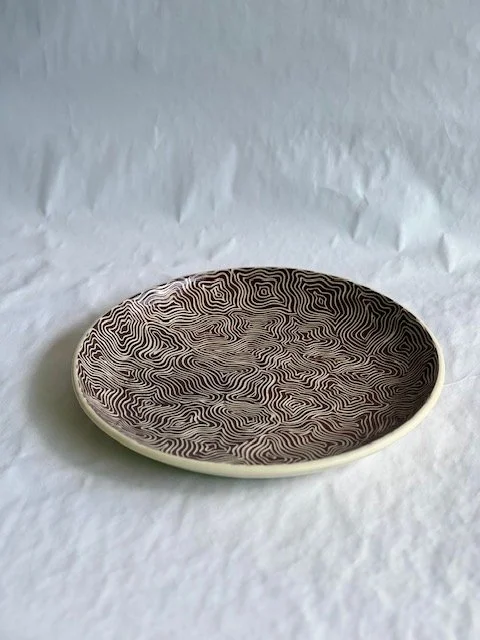
Yura Billa, 2026
stoneware
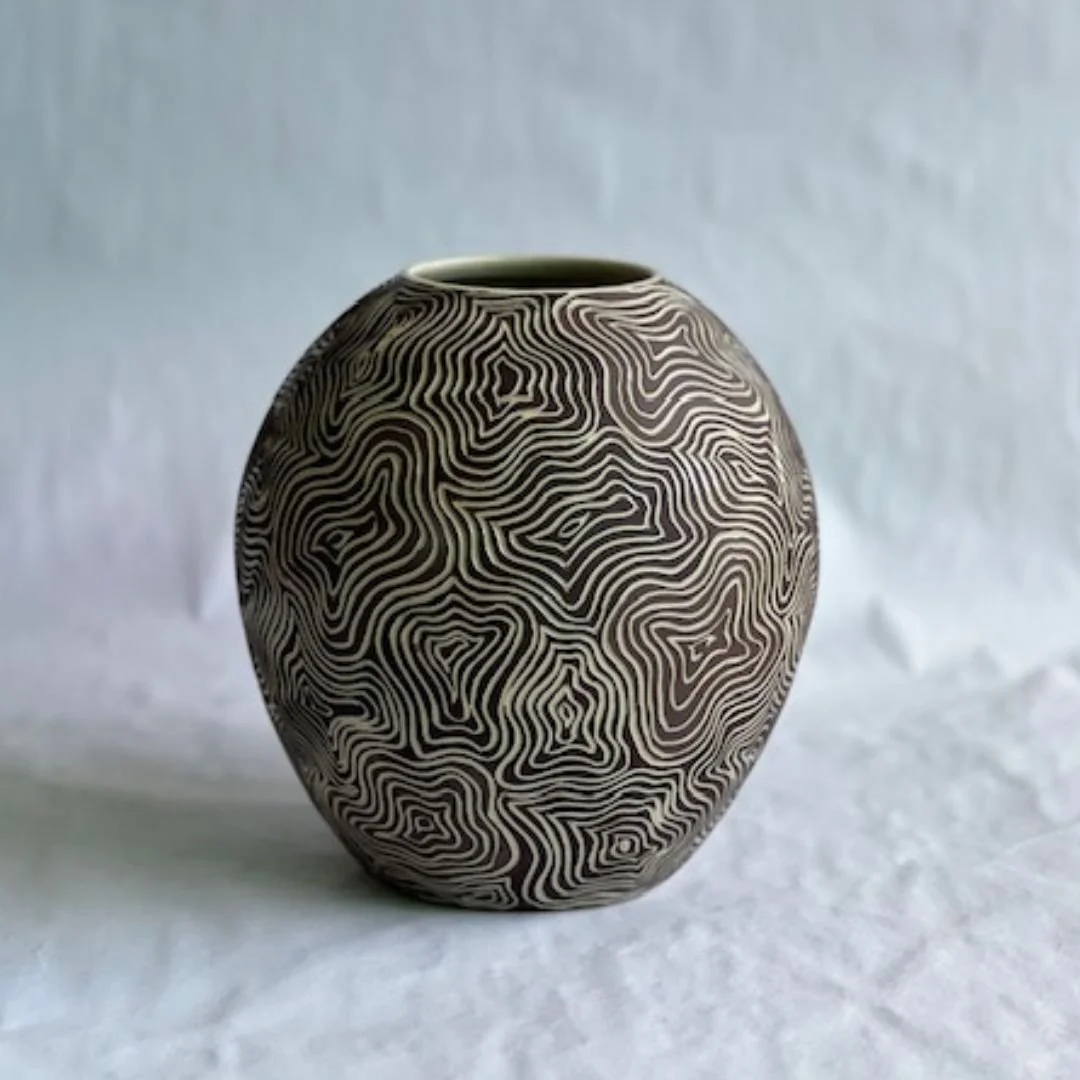
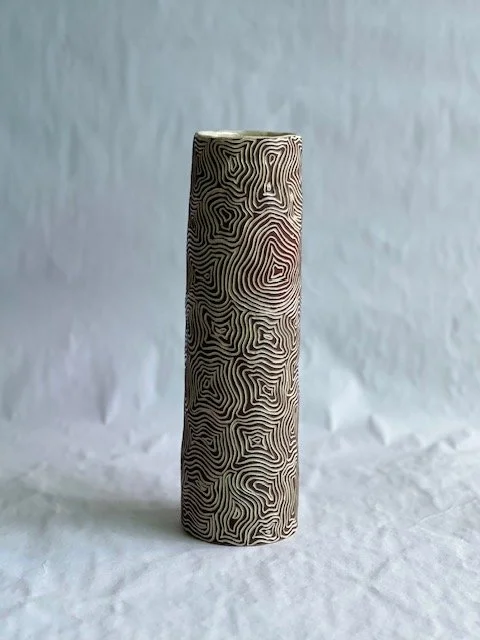
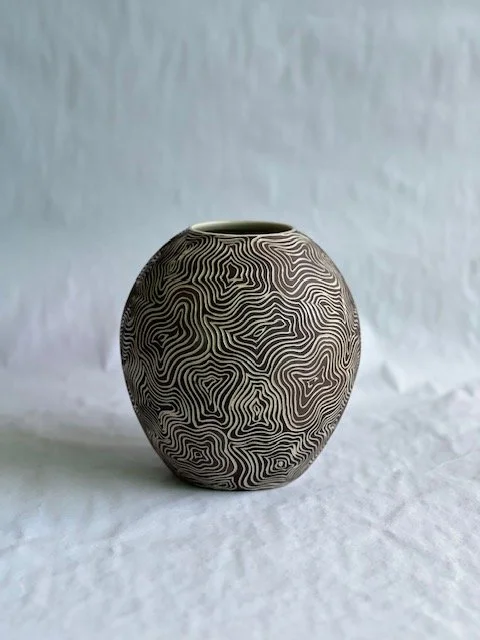
This particular sculpture holds great cultural significance, this shows the two Moiety systems in Adnyamathanha Culture also known as Velnarpa, the two points on this sculpture is a representation of Arraru (North Wind) largest point and Marthari lower point ( South Wind). This was our two marriage systems and the children always follow the mothers bloodline.Idiawi (Edeowie), 2026
stoneware
This sculpture is Ikara (Wilpena Pound) Looking from the western side of the mountain range. The concentric circle represents Awi (Water) and the other concentric shapes is the Yarta (Country).Ikara Undu Ulla Ulla, 2026
stoneware
This sculpture represents Ikara ( Wilpena Pound) from sunset side, the lines down the side presents the sun hitting the side of the range on sunset as the concentric shapes on the top is the Yarta (country) that settles on the top of the mountain range.Ikara Yurlu, 2026
stoneware
This Platter is Ikara ( Wilpena Pound) the meeting place where Yurlu( King Fisher Man) travelled to hold the ceremony for our people. Ikara has many sacred spots, one being a birthing Place for woman many years ago.Yarta, 2026
stoneware
This Sculpture is Yarta (country) this represents the Flinders Ranges the Adnyamathanha people. Adnya means rock and Mathanha means people, we are the rock people, the hill people of the Flinders Ranges.Ikara, 2026
stoneware
This Sculpture is a part of Ikara (wilpena) Pound you can see this particular spot from the Western side of the mountain Range.Ikara Vurtu vurtu (wilpena Dusty Dusty) , 2026
acrylic on canvas
This painting Represents the land formations surrounding Ikara (Wilpena Pound) the concentric lines that continue in each other is my representation of the land looking down from a Birds Eye view. Ikara is a special place as its where we held cultural ceremonies. The colour represents the change in season when the country is dry and dusty.Awi Awing Yarta, 2026
acrylic on canvas
This painting is a representation of country. Specifically, after large rain, the blues represent the rain the sits on country across the vast mountain ranges, surrounding and including Ikara (Wilpena Pound). After rain the country is in abundance.Yarta (country) is important to me, it’s where I grew up learning from my family, it’s where I continue my art and it’s where my kids now learn culture.
Joeulla Coulthard is an Adnyamathna, Kuyani artist who grew up on Country in the northern Flinders Ranges. Her work includes painting and ceramics which speak about the landforms where she grew up, the seasons, and the cultural stories of Yarta. For Joeulla, artwork is a conversation piece, talking about the meaning and why it was made keeps her art and culture alive. Joeulla has exhibited in Blinman Art, Tarnanthi, and Wilpena Art.
-
Hold me, 2022
natural fibres, waxed Hemp thread, human hair, recycled fabrics of Juanella’s Grandmother and woven emu feathers
Hold Me is a woven carry dish symbolic representing 5 generations of women connected through the woman's line passed mother to daughter. My great grandmother, grandmother, mother, myself and my daughters. Each woven with a cloth or hair belonging to or fibre representing, through time our DNA intertwined and becoming one. Passing on of tradition, knowledge, sacred customs, identity and belonging.
Watarchi, 2026
raffia and woven emu feathersYutara and Ita, 2026
native lemongrass, raffia and white cockey feathersKookaburra, 2026
raffia and kookaburra feathers
Sacred Vessel: These vessels tell the story of knowledge of country and continuity of cultural practices. The importance of handing the knowledge to the next generation to carry us into the future. As women our bodies are vessels for life, we care for, nurture, love, protect and teach the keepers of tomorrow. Every songline, every custom, and every deep truth is gathered and held safe, poured into the vessels of our collective memory. Cultural preservation sustains us It is who we are, a sacred legacy ensuring longevity and that the fire of our identity is never extinguished. We fill our vessels of knowledge, understanding the profound importance of handing this knowledge down to the next generation.Juanella Donovan nee McKenzie, is an Adnyamathanha, Luritja and Arrernte woman of South Australia living and working on Barngarla land, Port Augusta. Juanella is a multi-disciplinary artist, best known for her unique ability to make intricate works with woven emu feathers. She has been in countless exhibitions since childhood and, in recent years, won Malka aboriginal Art Prize 2020, won the breaking Ground award 2021, Ramsay Art Prize Finalist 2021, Pt Augusta NAIDOC Artist of the year 2022, NATSIAA finalist and people’s choice winner 2022, NATSIAA finalist and people’s choice winner 2025. Hazelhurst Art on Paper Award finalist 2025 and Wollongong Art Prize finalist 2025. She is currently developing work for The National Textile Triennial which will open in September 2026 in Tamworth NSW and later tour nationally.
-
Kungkarangkalpa (Journey of the Seven Sisters) I-III, 2026
acrylic on canvas board
These three paintings tell the story of Kungkarangkalpa (The Seven Sisters), one of the great ancestral stories of Australia’s Western Desert. It is a living cultural story shared across many Aboriginal nations and one that belongs to my Yankunytjatjara, Antikirinja and Pitjantjatjara heritage.For Aboriginal people, these stories are more than legends. They are living knowledge that connects us to Country, family, culture and the night sky. They teach us how to live, how to care for one another and how our ancestors shaped the land we know today.
My middle name is Purveen, a Persian name popular in Pakistan, meaning Pleiades - the star cluster known around the world as the Seven Sisters. I’ve always loved that both sides of my heritage share this connection to the same stars. Although the stories are different, they remind us that people across cultures have long looked to the night sky for meaning, guidance and belonging.
I was taught the Kungkarangkalpa story by my family from a young age. As a child I lived at Cave Hill near Amata on the APY Lands, a place deeply connected to this story. My great-grandfather’s family came from this area, and it remains an important cultural landscape today, with ancient cave paintings, sacred places and generations of knowledge held within the Country itself.
The Seven Sisters descended from the sky and travelled across the desert, creating and naming places as they journeyed. Their travels formed waterholes, landmarks and sacred sites that continue across hundreds of kilometres of the Western Desert. These places are connected through songlines / ancient cultural pathways that carry history, law and knowledge from one generation to the next.
Throughout their journey the sisters are pursued by Wati Nyiru, a powerful ancestral man who can transform himself and use deception in his attempts to catch them. The sisters survive because they stay together, listen to one another and follow the wisdom of the eldest sister.
She has always been my favourite part of the story. She is calm, observant and protective. She teaches her younger sisters to recognise danger and not to be deceived by appearances. At one point she warns them not to eat fruit from a beautiful tree because she knows it is a trap. Her wisdom and leadership keep the sisters safe.
I think this is why the story has stayed with me throughout my life. It reminds me of the strength of Aboriginal women, the importance of listening to our elders and the responsibility we have to protect one another. These teachings remain just as relevant today as they have been for thousands of years.
Across these three paintings, the story unfolds as one continuous journey. The flowing lines represent the movement of the sisters across Country and the pathways that connect places, people and stories. The circular forms represent camps, significant places and the sisters themselves. The largest circle symbolises the eldest sister, while the red circle in the central painting represents Wati Nyiru, whose presence follows throughout the journey. In the final painting, the sisters return to the sky, becoming the Pleiades star cluster that can still be seen above us today.
Creating this series has been deeply personal. It honours the stories passed down through my family and celebrates the connection between both my heritages through the shared significance of the Pleiades.
For me, these works are ultimately about women holding one another through knowledge, love and protection. They reflect the spirit of Held: the quiet strength of mothers, sisters, aunties and grandmothers who carry culture, safeguard knowledge and continue to hold families and communities together across generations.
Lisa Khan is a Yankunytjatjara/ Antakirinja/ Pitjantjatjara artist from Coober Pedy. Lisa paints her Grandmother's ngura (my home, the land and rockholes) as well as her Grandfather’s country, he was born at Wallitina Station. She says ‘when I paint, I feel connected to my country and my grandparents who aren't here anymore, It is my job to look after the country and the stories from my grandmothers.’

This project has been assisted by the Australian Government through Creative Australia, its principal arts investment and advisory body