You can find Carmen’s exhibition in The Mill’s Gallery I, located at 154 Angas St, Kaurna Yarta (Adelaide).
Gallery I is open Monday-Friday, 10am-4pm.
Accessibility
The Mill’s entrance has a small step into the building. We have a ramp available, please ring the doorbell and our friendly team will assist you.
During gallery hours, our entrance will be unlocked. If the door is closed, please ring the doorbell to alert our team.
The Mill has concrete flooring throughout with no internal steps and a disability toilet on site.
Read more in-depth information on our accessibility web page.The Mill has concrete flooring throughout with no internal steps and a disability toilet on site.
We are excited to present Hasta La Raíz, a new exhibition by Carmen Alcedo developed through our Photographer in Residence program, presented with support from the Ana and Christopher Koch Foundation and Black and White Photographic.
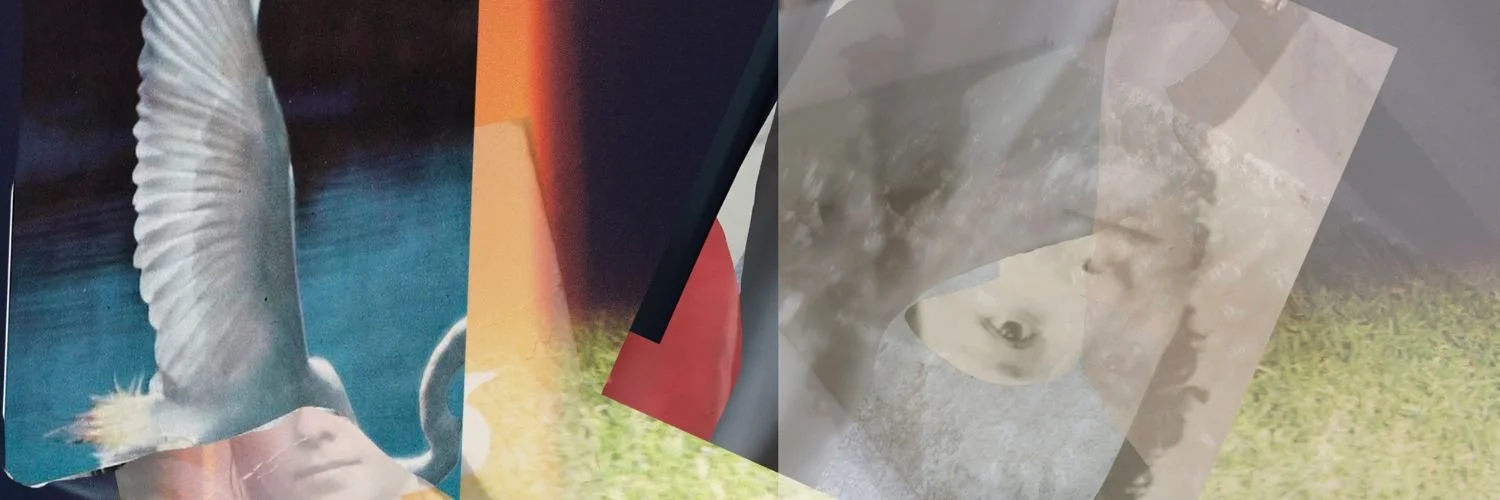
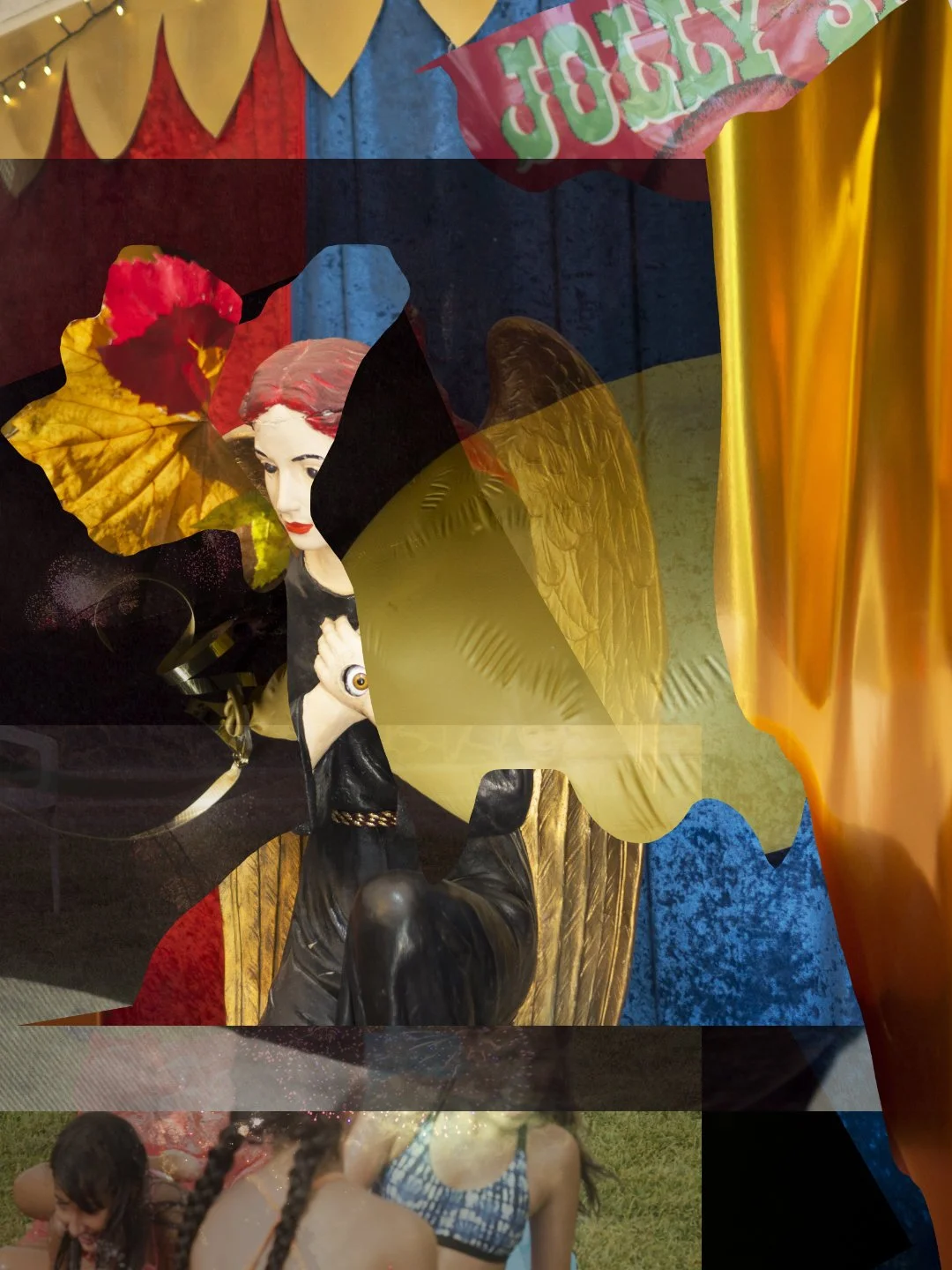
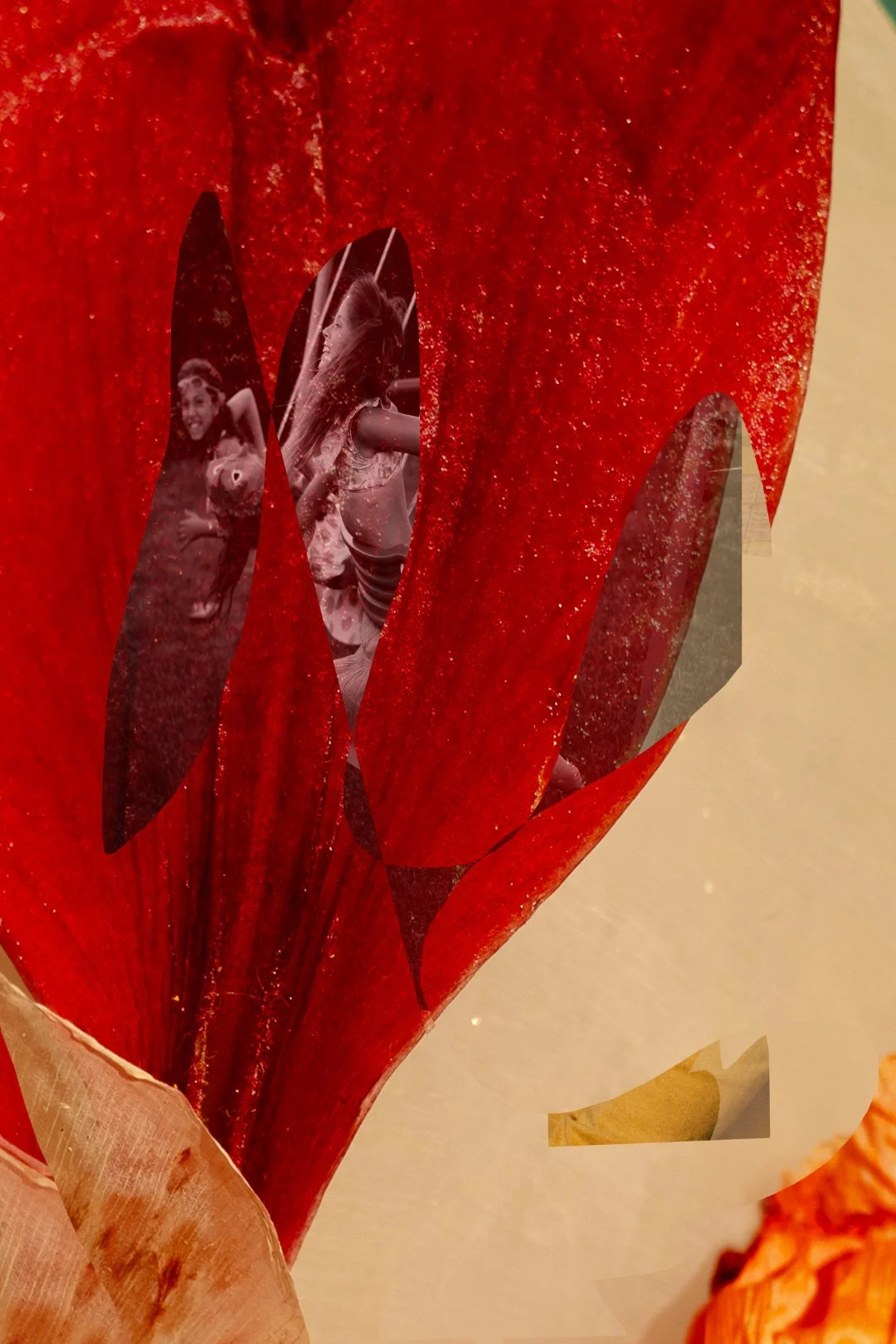
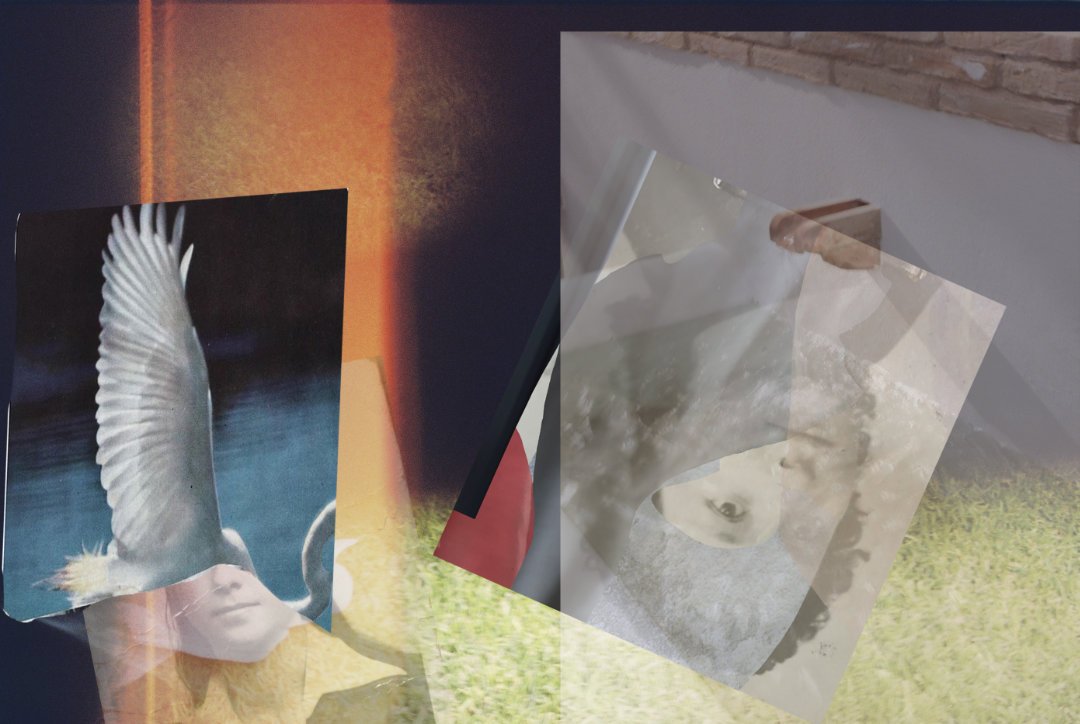
Through layered digital and analogue collage, Carmen creates atmospheric images referencing her personal experience of migration from Spain to Australia. Archival images and elements from her hometown of Sevilla are layered with portraits of her grandparents, nieces and her younger self, and contrasted with photographs taken over her four years of living here in Australia. The opera house, iron rich red dirt and twisting branches of gum trees sit alongside images of her children in makeshift La Semana Santa costume; Carmen’s beloved nieces play under the watchful eye of a golden winged angel; petals open portals to connection and play.
Deeply complex, and brimming with symbolism and personal narrative Carmen’s new body of work invites us into an emotional reflection. What are the emotions that we feel when we think of home? What happens when the idea of home that we long for is no longer a physical place that we can visit? How does identity ebb and flow through our every day life? What anchors us in culture, identity and memory?
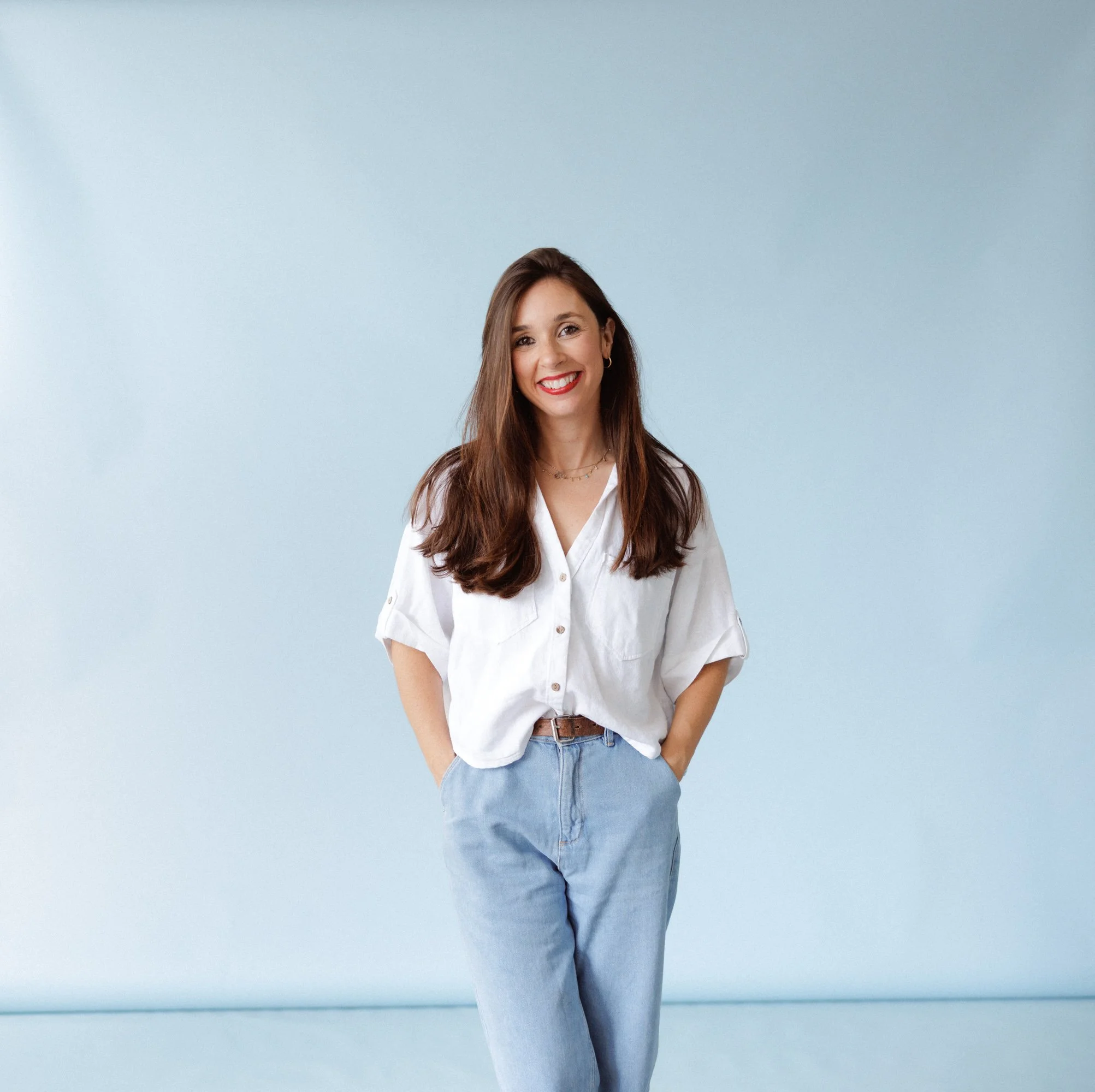
Carmen Alcedo is a Spanish-born freelance photographer based in Adelaide, South Australia, with a background as a lawyer. With over seven years of experience in professional photography, her work focuses on storytelling, capturing personal narratives and intimate moments through both portrait and documentary photography. Carmen’s artistic practice explores themes of identity, transformation, and human connection, often delving into how we relate to our environment and the people around us. She combines technical proficiency with emotional depth to create visual narratives that resonate with the viewer. Carmen’s exhibitions include Imaginary Journeys (SALA 2024), currently on display at Cherrybomb Cafe in Adelaide, and my participation in the group exhibition TEACHERS, LEAVE THE KIDS ALONE at 229LAB in Paris (2024), the Hybrid Art Fair (2016-2018) and the Affordable Art Fair in Sydney (2022). Currently, Carmen is involved in community-driven art projects in the Brompton Community Garden, where she collaborates with others to create work that fosters connection and environmental awareness.
Memory never returns as it was lived; it arrives transformed, layered with distance, imagination, and longing. What we love becomes shaped by absence, turning into a kind of fiction, a version charged with nostalgia and emotion. The fragile space between truth and imagination is where my practice unfolds.
This exhibition is about my personal experience of migration and the constant negotiation of identity it involves. The cultural clash of displacement leaves me feeling suspended, forcing me to question every day who I am, where I come from, and how to situate myself in a place that does not belong to me. From the most ordinary details to the most unexpected, everything fractures, creating an abyss where familiar anchors - culture, identity, memory - recede, demanding the reconstruction of a world from zero, yet built with all that you already are and all that you belong to.
Each photograph I create carries a deeply personal story through overlapping layers and collage. These layers include images I have taken since arriving in Australia four years ago in a really intuitive way, from the landscapes that surround me here to fragments of my grandmothers’ homes in Spain. Within them, I place the ache of moments never lived, the strangeness of cultural fragments, and the difficulty of transmitting my heritage to my children in a way that feels alive rather than imposed.
The process of making this body of work has been an exercise in giving voice to what I am, to what converges within me, and to honour the places, the people, and the culture I come from. Here, photography becomes not only a medium of documentation but also of transformation. By layering images, I attempt to bridge distances - between countries, generations, and languages - while also honouring what remains unbridgeable. My practice is a way of inhabiting those gaps with honesty, tenderness, and resilience.
You can find Object Permanence in The Mill’s Gallery I, located at 154 Angas St, Kaurna Yarta (Adelaide).
Gallery I is open Monday-Friday, 10am-4pm.
Accessibility
The Mill has two entrances, the main entrance on the corner of Angas and Gunson Street and an accessible entrance further down Angas Street.
Both doors are locked from the outside, there is a doorbell on the main door that will alert The Mill team. They will meet you at the accessible entrance to welcome you into the building.
The Mill has concrete flooring throughout with no internal steps and a disability toilet on site.
We are excited to present Object Permanence, a new exhibition by Bri Hammond developed through our Photographer in Residence program, presented with support from the Ana and Christopher Koch Foundation.
For Object Permanence Bri has developed a personal project examining the relationship between objects and memory, connecting generations of her family through unlikely treasures. Bri’s signature bright colours and playful aesthetic elicit common memories of childhood. Collections of doll hair brushes, shells collected on the beach by her grandparents, and pieces of board games are common place and yet exquisitely familiar, capable of transporting us back to our own birthday parties and beach trips. While easily disregarded, Bri’s attention to these objects sheds light on their relationships to our bodies, every object held by tiny hands. At the same time, Bri speaks about the joys and the struggles of parenthood, and the overload of information, parenting hacks, theories of childhood development and pasta necklaces that come along with modern parenting.
Object Permanence is presented with support from the Ana and Christopher Koch Foundation.
Object Permanence is a still-life photographic series exploring the connection between parenting and childhood, using objects accumulated over generations. The term ‘object permanence’ is used to describe a child’s ability to understand that objects continue to exist, even though they can no longer be seen or heard. Through the work, I am questioning why families hold onto certain things, and how objects and photography can serve as tools for memory.
With vibrant colours and graphic compositions, the photos seem at first glance to exude a happy, everything-is-fine mood. But a closer look reveals grubby fingerprints all over a deflated balloon, or ripped hair stuck to an odd collection of tiny brushes. A dead bee, presented to me by my son, is melted into the wax of a birthday candle. A vase I’ve owned for decades, smashed during an unsupervised moment, is mended with playdough and houses a pipe-cleaner flower – a gift from childcare.
The hero piece displays hundreds of small items; gathered, photographed and printed on adhesive wallpaper. From precious gemstones foraged by my grandparents, to small game pieces and feathers found on the street, the composition examines what we place value on, especially when parenting and consumerism now feel so entwined.
I became a mum in 2022. While grappling with this transition, I came across a theory that has stuck in my mind. Psychotherapist Philippa Perry said in The Book You Wish Your Parents Had Read, ‘Whatever age your child is, they are liable to remind you, on a bodily level, of the emotions you went through when you were at a similar stage.’ This prompted me to look back on my own childhood and adolescence, the good and the bad. I’m hoping parents will feel a sense of solidarity with the work, and that others will recognise their own childhood within the frames.
Bri Hammond is a photographer living on Kaurna country in Adelaide, previously residing on Wurundjeri land in Melbourne, until recently. Her work displays a mix of authentic emotions and odd moments, usually expressed with poppy colours and graphic compositions. She loves championing the peculiarities of life and highlighting the idiosyncrasies of people and places. Originally a graphic designer, she began her career with a year-long residency at Fabrica, Benetton’s Creative Research Centre in Treviso, Italy in 2011. Bri now creates images for a wide range of clients, publications and organisations across Australia with a unique visual approach.
Bri’s debut solo exhibition ‘Nuoto da sola (I swim alone)’ was shown at Brunswick Street Gallery in Melbourne, 2019. In 2022, her first photobook ‘Endline - Deathcare during Melbourne’s Covid Crisis’, won the photobook prize at Melbourne’s Centre of Contemporary Photography. Bri has completed a Bachelor of Visual Communication (Design) at UniSA, and a Bachelor of Arts (Photography) at RMIT.
This exhibition has support from
The Mill’s Photographer in Residence program, presented with support from the Ana and Christopher Koch Foundation.
The Mill has two entrances, the main entrance on the corner of Angas and Gunson Street and an accessible entrance further down Angas Street.
Both doors are locked from the outside, there is a doorbell on the main door that will alert The Mill team. They will meet you at the accessible entrance to welcome you into the building.
The Mill has concrete flooring throughout with no internal steps and a disability toilet on site.
Join Bri Hammond and The Mill's Visual Arts Curator Adele Sliuzas for a chat about Bri’s new solo exhibition Object Permanence showing in Gallery I.
About the exhibition
We are excited to present Object Permanence, a new exhibition by Bri Hammond developed through our Photographer in Residence program, presented with support from the Ana and Christopher Koch Foundation.
For Object Permanence Bri has developed a personal project examining the relationship between objects and memory, connecting generations of her family through unlikely treasures. Bri’s signature bright colours and playful aesthetic elicit common memories of childhood.
Bri Hammond is a photographer living on Kaurna country in Adelaide, previously residing on Wurundjeri land in Melbourne, until recently. Her work displays a mix of authentic emotions and odd moments, usually expressed with poppy colours and graphic compositions. She loves championing the peculiarities of life and highlighting the idiosyncrasies of people and places. Originally a graphic designer, she began her career with a year-long residency at Fabrica, Benetton’s Creative Research Centre in Treviso, Italy in 2011. Bri now creates images for a wide range of clients, publications and organisations across Australia with a unique visual approach.
Bri’s debut solo exhibition ‘Nuoto da sola (I swim alone)’ was shown at Brunswick Street Gallery in Melbourne, 2019. In 2022, her first photobook ‘Endline - Deathcare during Melbourne’s Covid Crisis’, won the photobook prize at Melbourne’s Centre of Contemporary Photography. Bri has completed a Bachelor of Visual Communication (Design) at UniSA, and a Bachelor of Arts (Photography) at RMIT.