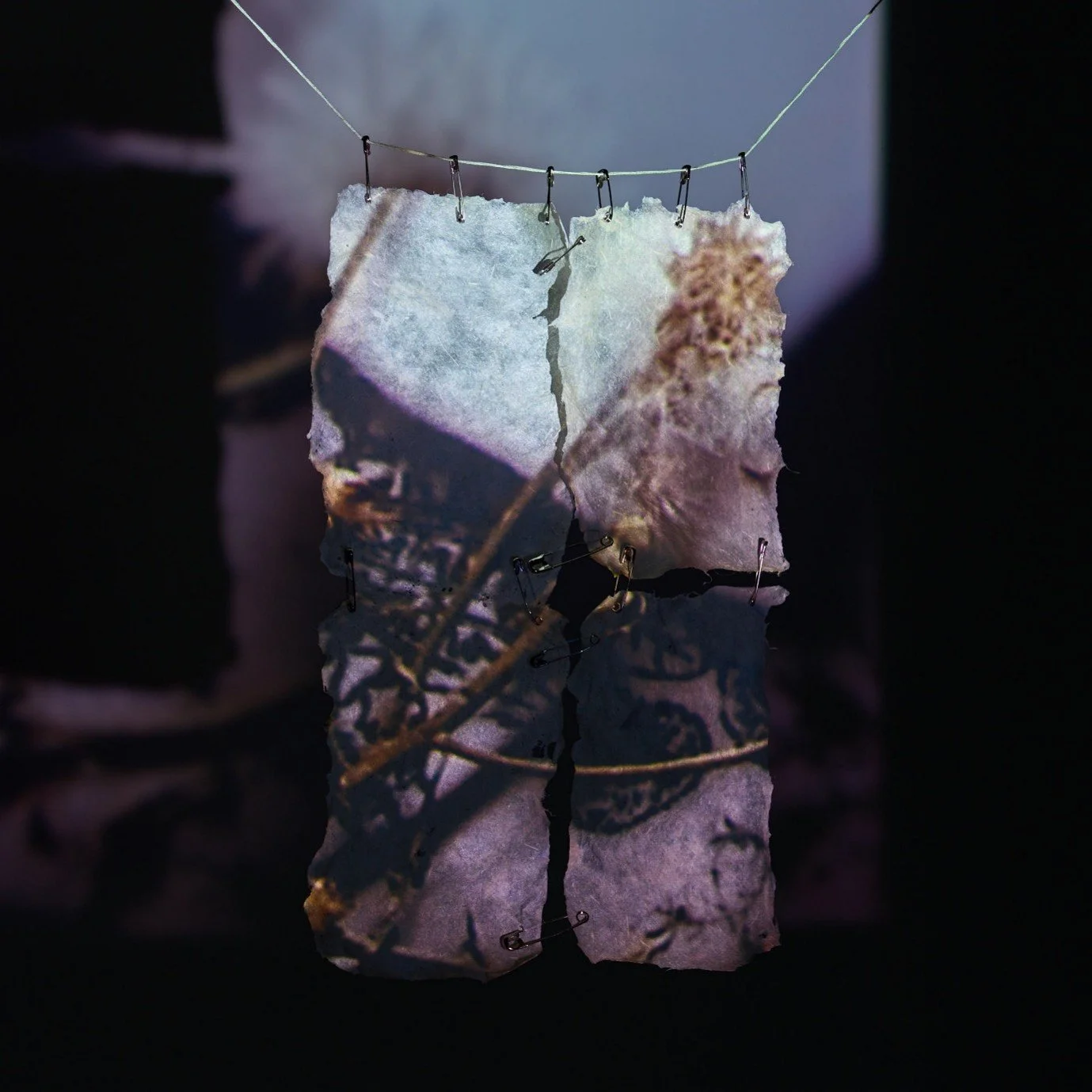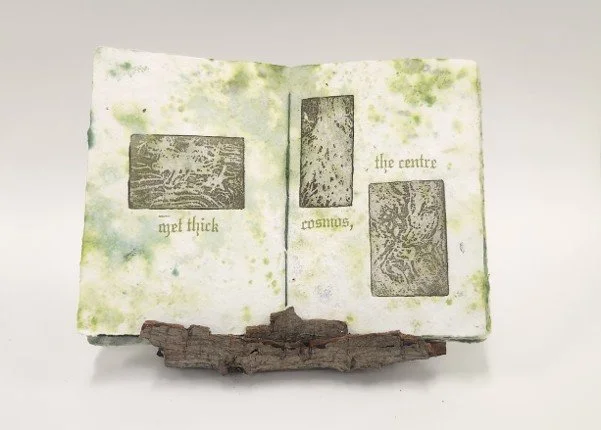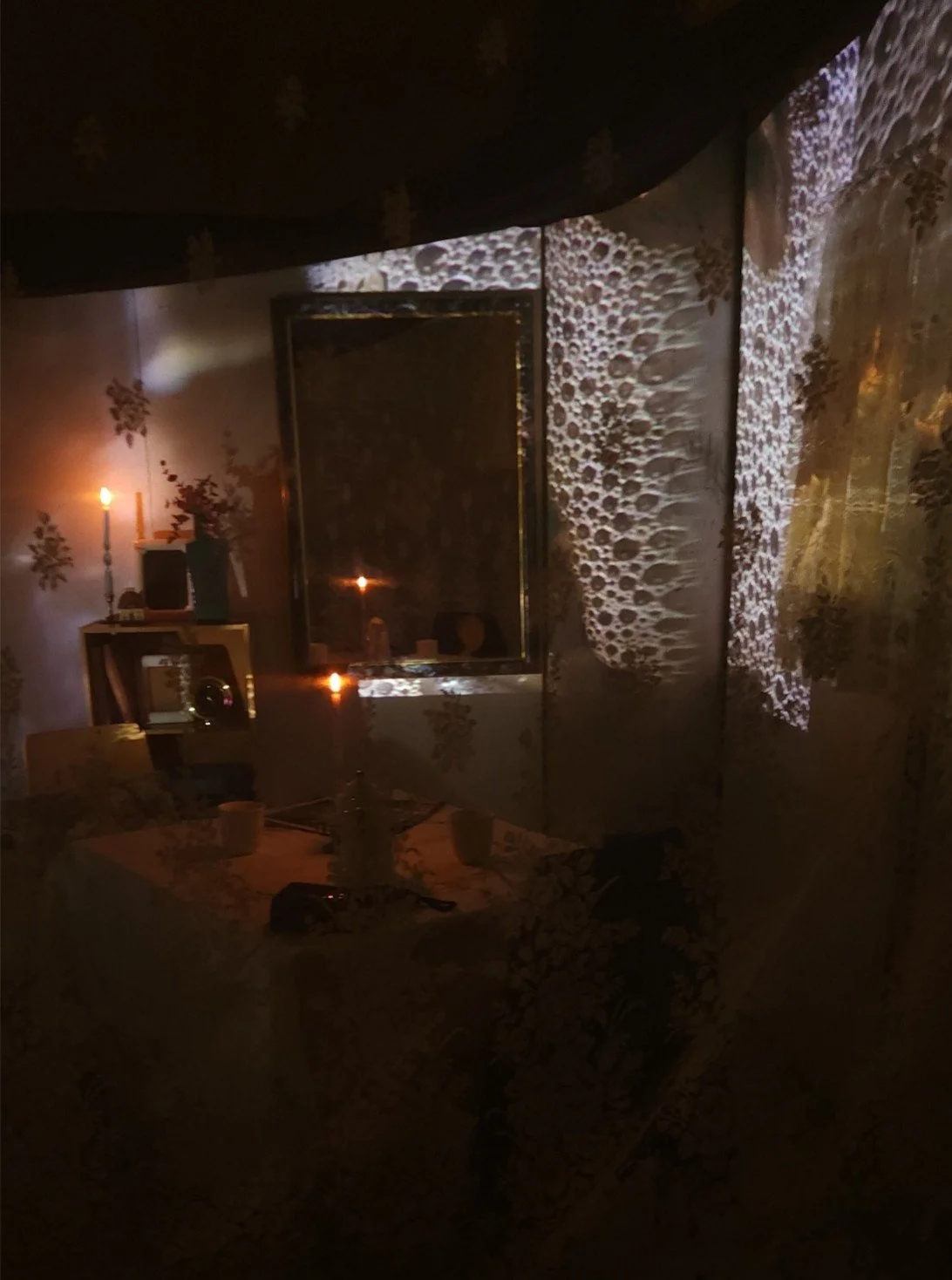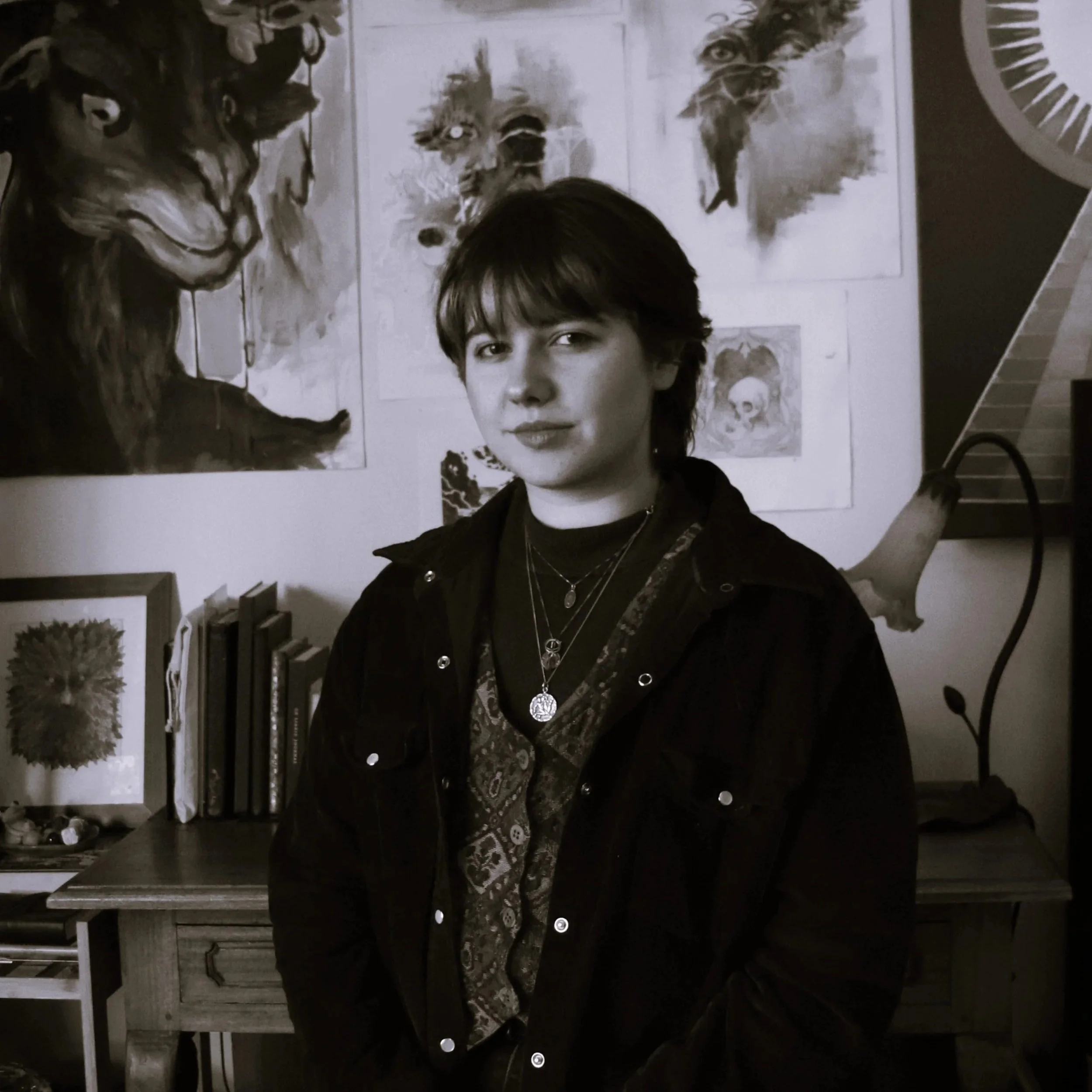
Frankie Acacia is a non-binary artist and arts worker living and working on Kaurna Land. Working across printmaking, papermaking, bookbinding, installation, projection and collaborative programming, their practice is concerned with memory, queerness & materiality.
Frankie's studio practice is driven by an interest in the materials through which memory becomes tangible: found objects, photographs, domestic remnants, archival images, personal collections and shared experiences. They often work from existing archives or self-formed collections, approaching memory as something partial, intimate and unstable. Across recent work, material transformation and acts of making have become ways of holding experiences that are difficult to preserve or articulate directly.
Alongside and increasingly within their artistic practice, Frankie develops exhibitions, events and artist-led projects that create experimental platforms for emerging practitioners. Their work is grounded in an interest in how structures of participation, collaboration and care can support artists outside conventional institutional frameworks. They are particularly interested in artist-led and temporary spaces as sites for experimentation, exchange and cross-disciplinary collaboration.
In 2024, Frankie received a Carclew Project & Development Grant to develop The Dance Macabre, an exhibition and performance program bringing together fifteen emerging South Australian artists working across print, film, ceramics, sculpture and photography. Earlier curatorial projects include the group exhibitions Chaos & Cosmos and The Art House. They have also contributed to the MOD. Future Forum & Youth Board, NEO Advisory Board and SHARE Youth Arts Committee, working across public programming, events and youth engagement.
Across both their studio and organising practices, Frankie is interested in what it means to make and maintain spaces for things that might otherwise disappear: memories, histories, relationships, experimental practices, and forms of knowledge that sit outside established structures. Their work asks not only what we choose to remember, but how we might build the conditions for new things to emerge.