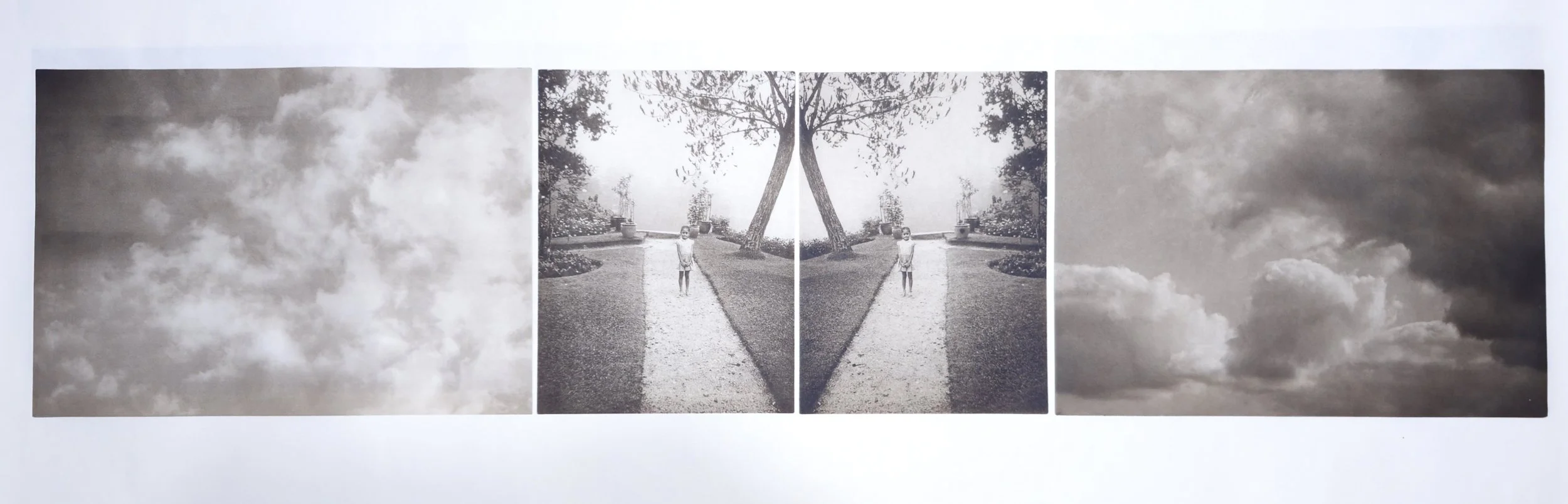
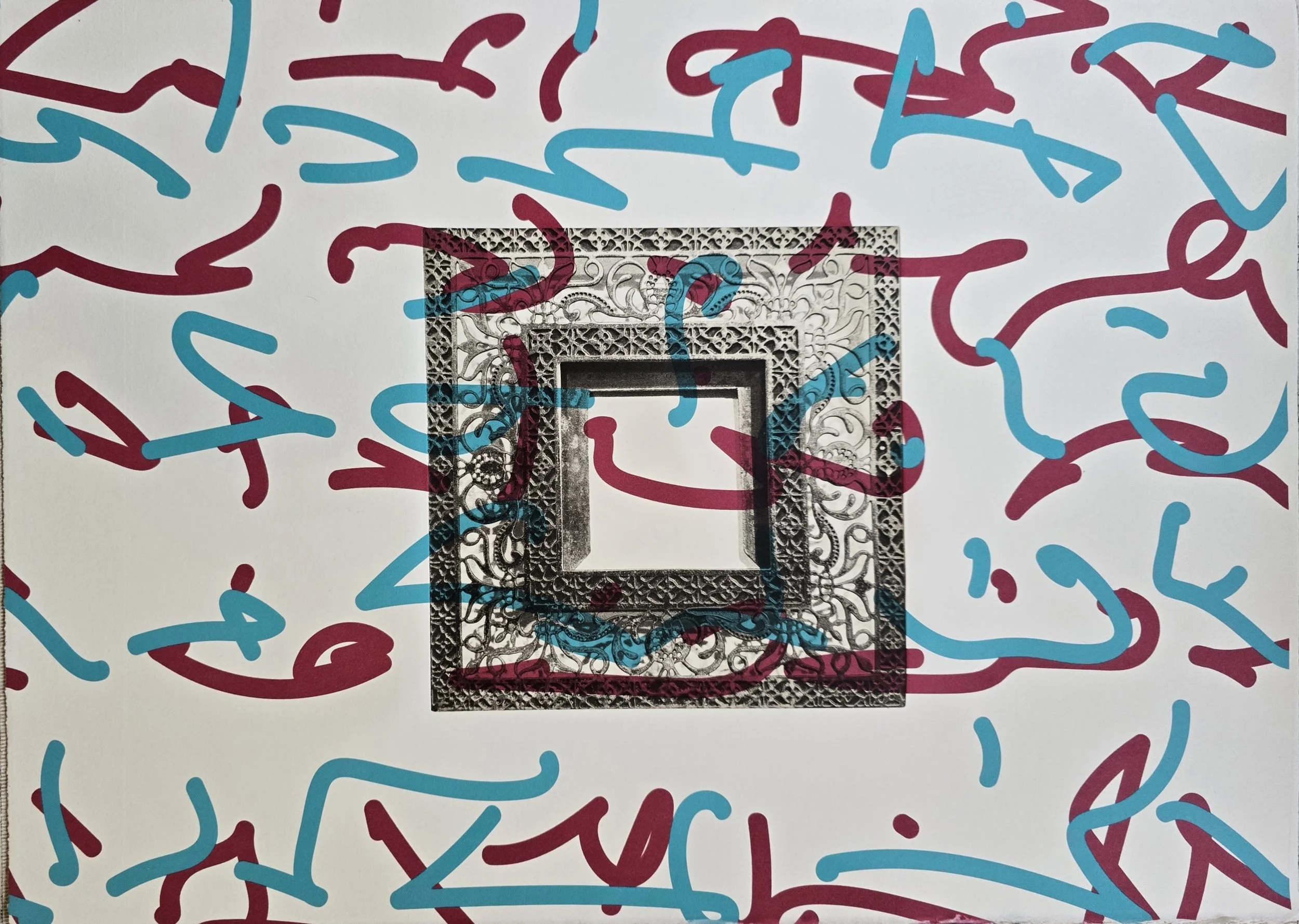
Photo: courtesy of the artist.
October 16, 2026- January 15, 2027
Opening night: Friday, October 16, 5:30-7:30pm
Gallery II, 154 Angas St, Kaurna Yarta
Free entry, all welcome
-
You can find The Unspoken: Intimate portraits & silent dialogues in Gallery II, located at The Mill, 154 Angas St, Kaurna Yarta (Adelaide).
The Mill’s galleries are open Monday-Friday, 10am-4pm.
Accessibility
The Mill’s entrance has a small step into the building. We have a ramp available, please ring the doorbell and our friendly team will assist you.
During gallery hours, our entrance will be unlocked. If the door is closed, please ring the doorbell to alert our team.
The Mill has concrete flooring throughout with no internal steps and a disability toilet on site.
Read more in-depth information on our accessibility web page.
We are excited to present The Unspoken: Intimate portraits & silent dialogues, a solo exhibition by Sharifah Sorayya as part of OzAsia Festival 2026.
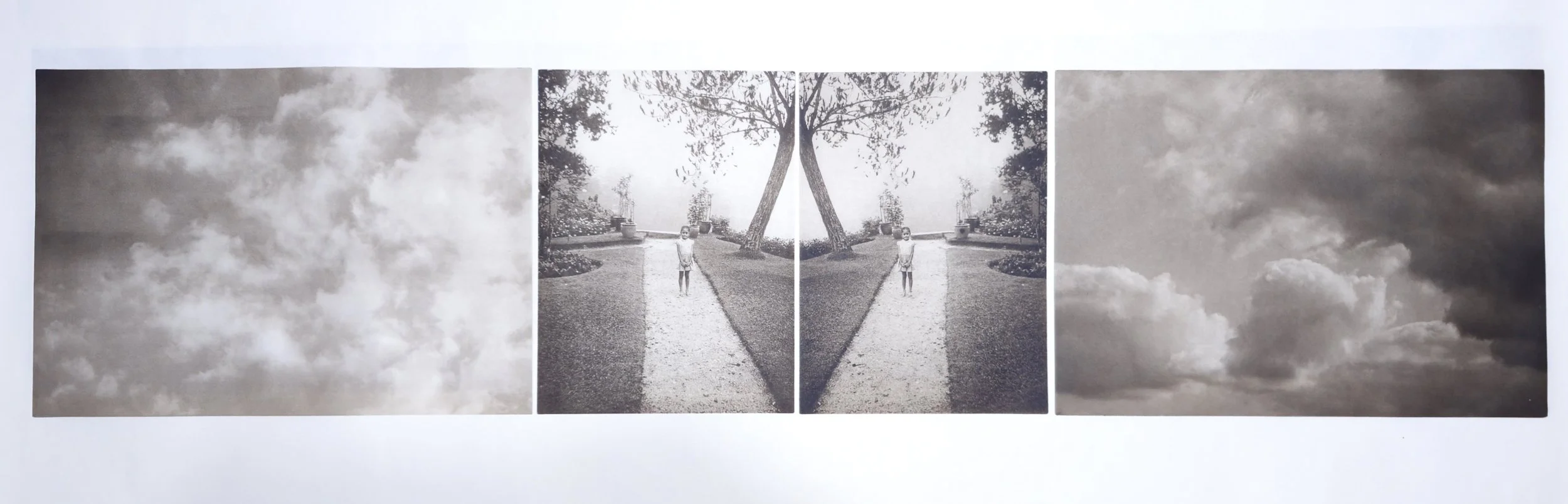
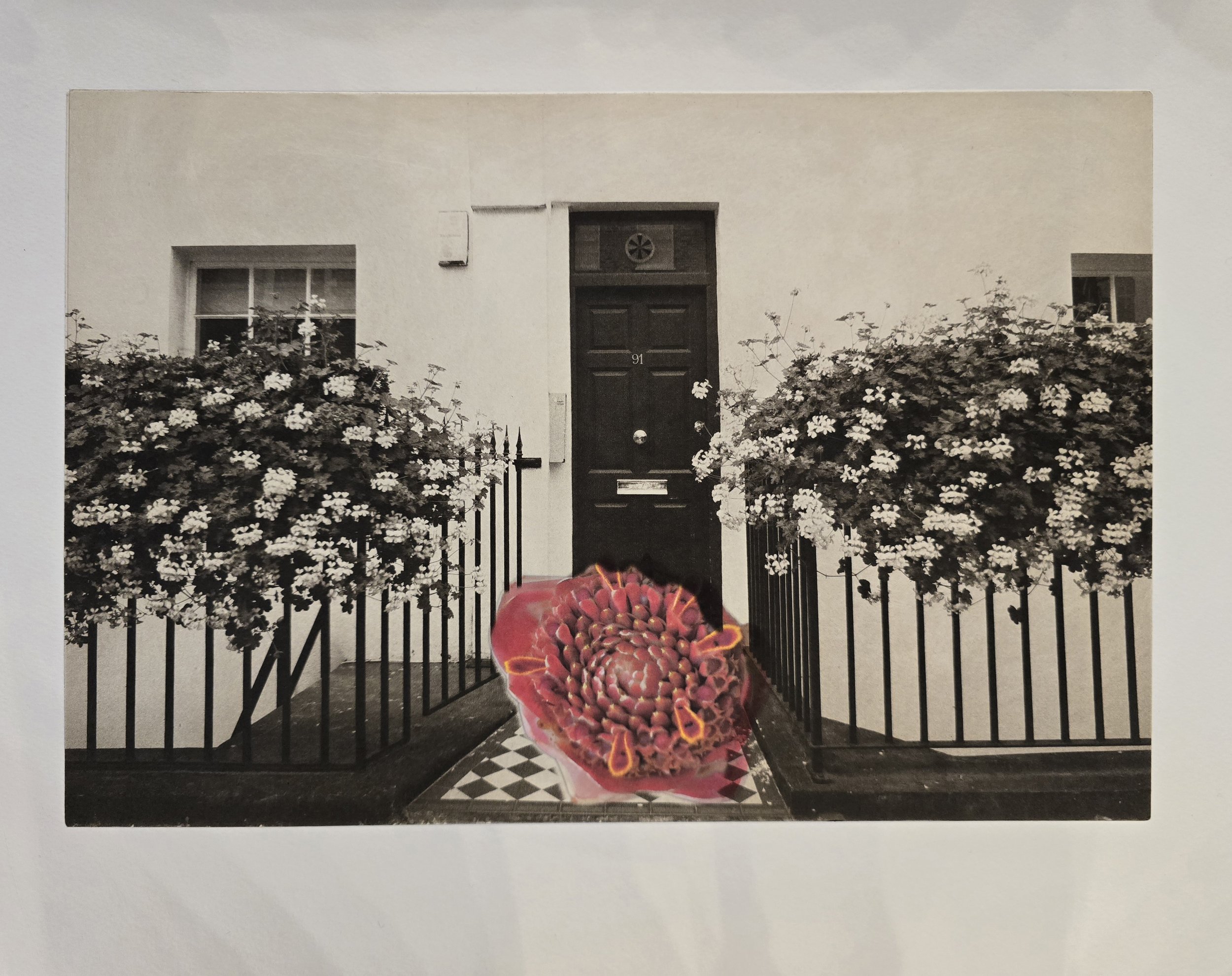
Using the photogravure technique, this layered, mixed-media series explores her identity as an Asian woman of mixed heritage, reflecting on family, her transcontinental existence as a global citizen and the resilience forged through life's unexpected challenges.
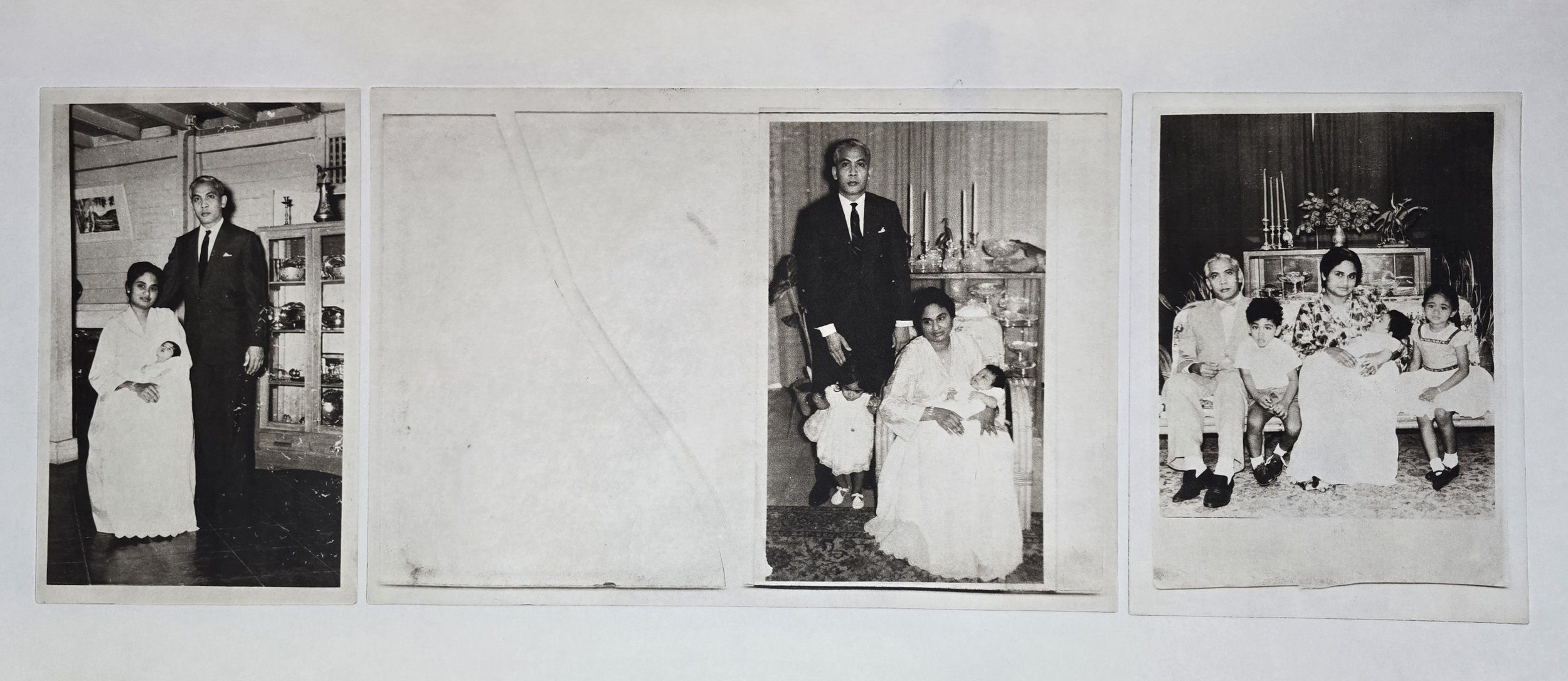
The Unspoken: Intimate portraits & silent dialogues is a deeply personal exhibition, unraveling memories of places, people, connection and disconnection. We see landscapes from Malaysia, England and Australia, layered with abstracted figures, torn pages and envelopes stuffed full with notes from home- letters, as well as money. Divine architecture is overlaid with Sorayya’s mother and father’s handwriting, linking and contrasting with Sorayya’s own asemic text; illegible but full of meaning.
-
In this series I show my photogravure work reflecting my heritage and its significance to me, my life’s journey before settling in Australia. I have lived in Australia for almost 26 years. This work has taken all that time to distil and about 12 months to pull together into a cohesive exhibition. These prints serve as both personal archives and universal monuments to the psychological weight of relocation.
My work tends to be layered, reflecting my life experience and my cultural heritage as well as my interest in mark making. With time memories fade and all I had to cling to were the few photographs of my childhood. I have lost the photos of much of my parents and my and my children's growing years. When I close my eyes to look back or think I see snapshots of images in black and white although I love colour. So photography and photogravure printmaking appealed to me. In this body of work I try to recreate what I have lost using symbolism and abstraction. Photographs represent a moment in time. Some recollections are so detailed and others murky. Some happy, others sad.
I came to Australia, two children in tow, as a skilled migrant who decided I wanted to build a new life. Not a better life. I had been sheltered all my life and provided I conformed to societal rules, all would be right. Personal events followed which resulted in my being made to doubt my personal decisions while I lived with a restricted life as a single mother which required me to comply with the social mores. I had two little children who depended on me. I could not be me and I needed to be me to be happy and to bring them up differently, not to expect an easy life but to be resilient as life had already shown me then that it was not going to be easy. I needed a new life. This did not mean I would leave the fabric of what was me behind.
In my enthusiasm to start life anew I did not expect to face difficult challenges on almost all fronts: personal, family, professional and cultural. There is an expectation that when we migrate we leave everything behind as if it is all bad or needs to be forgotten. The reality is that my experiences were not considered important to most people here: there was no need to learn who I am, where I came from, what I could give or contribute or what I sacrificed to be here. I was expected to just be happy or grateful.
What I had going for me was my heritage, my upbringing which nurtured resilience and my determination to succeed supported by the love of my husband.
The prints in this exhibition serve to illustrate my past as well as contemplate what is current, the future and where I truly belong and want to be. I add my own hand to the printing process. Each image talks to me and how I resolve each work is dependent on the emotions my memories and experiences evoke. With each imprint I exercise ‘pasado pisado’, the Spanish proverb for learning to let go. With each act of letting go I hope to grow.
Photogravure is a printmaking process combined with photography which uses a light sensitive plate etched to produce details and tones of an image or combination of images. This is then printed onto paper. The etched quality of the photogravure process, the act of pressing an identity onto the new surface, leaving an indelible mark while altering the new often blank surface resonates with me.
I do not believe I have reached the end point of this explorative series yet. The journey continues along my river of life which brings something new with each bend I navigate. Hopefully I will be stronger and wiser with each twist and provide a firmer foundation for my children and for generations to come.
-
Sharifah Sorayya is a Malaysian-born interdisciplinary artist based on Kaurna land by way of England, Saudi Arabia, and Canada. She is heavily influenced by her familial and personal lived history, particularly through pre- and post-independence Malaysia including the May 13, 1969, racial riots, her boarding school life In England and her lived experience in the Middle East, Canada and now Australia, all of which have impacted on how she deals with trauma and life’s challenges.
Growing up, her home was a dynamic socially aware venue for people from various walks of life, and her early home life was strongly influenced by the political and social legacy of first-wave feminism.
She dances between abstract paintings, textiles, drawing and printmaking – entering a dialogue with the materials and techniques to highlight the complexities of her life: its joys, sadness, unexpected turns and survival.
Her work has been exhibited throughout South Australia, in Victoria, New South Wales and is published in ‘Unmasked – Reflections on Virus Time’ curated by Sharmini Flint (Singapore), and is held in private collections across Australia, Malaysia, Singapore, the Middle East, and the UK. Her batik was exhibited as a visiting guest among Indonesian Batik alumni in the Cultural Museum in Jogjakarta in 2023 which was a great honour and it was accepted into the juried 1st International Batik Exhibition in Naples, Florida (USA), commemorating the International Year of Batik 2024/2025, where she was the sole representative for Australia. She has a published article “Batik Wax: A ritual steeped in belonging” in the July 2026 Batik Guild magazine Her photography was shown in Japan for a recent international exhibition and her photogravure print is part of a folio of 53 artists invited to be in the Baldessin Press Studio 25th Anniversary Collection which was launched at the Sydney Art Fair in September, will be on show at the National Galleries, Victoria in November and be part of the State Library Victoria Collection later this year.
She is a member of Central Studios, Kent Town, Bittondi Printmakers in South Australia, the Batik Guild UK and has close associations with batik artists in Jogjakarta, Indonesia.
Her work has been exhibited throughout Australia, Japan and Indonesia, and is held in private collections across Australia, Malaysia, Singapore, the Middle East, and the UK.

This project has been assisted by the Australian Government through Creative Australia, its principal arts investment and advisory body