
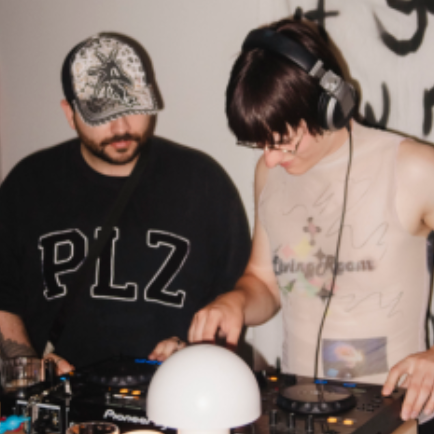
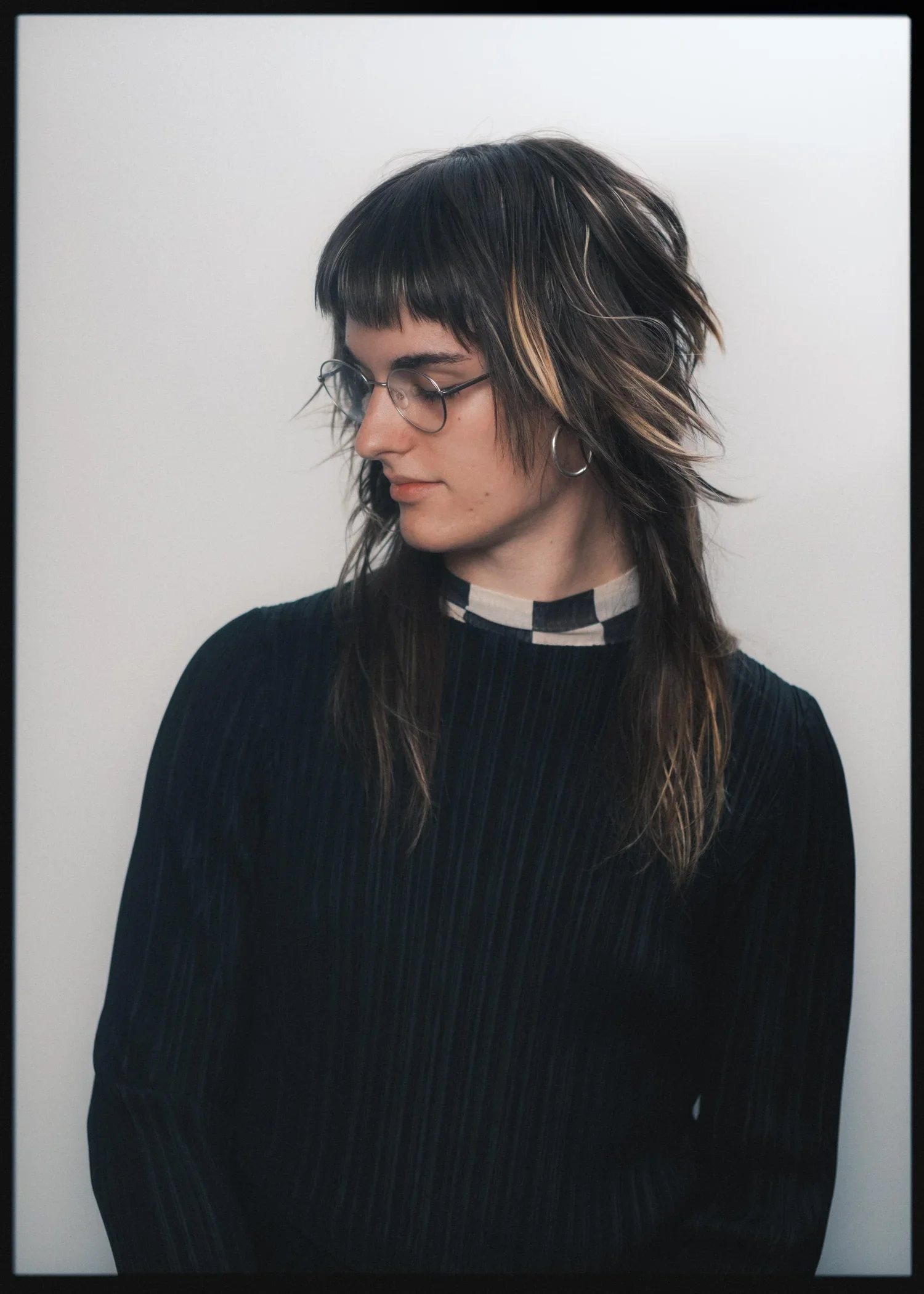
A multidisciplinary experimental artist Artemis Bishop, or ENHE, has been busy exploring new creative territory that reflects a deeper sense of her own artistic style and personal lived experience. Having only been a resident at The Mill for a short time, ENHE has already found a strong sense of community and belonging, the open space offering a chance to engage with other artists and be around like-minded people who are “welcoming and invested” in their own work.
I sat down with ENHE a few weeks ago to talk about her creative process and the work she is currently doing in her upstairs studio at The Mill.
S: What is something that you feel inspires you the most when you are making music?
E: That’s an interesting question. I think a lot of my inspiration comes from lived experience. I like to dream and like, come up with a mythology and then write music out of that. Since finishing uni I've been doing film work a lot of the time, going for every opportunity available. My process kind of became about finding out what the director wants. But this year, I’ve started working on my own EP and making club music. A lot of it is about asking myself what do I want, and what story do I want to tell? Or, what things have I learned for myself that I feel like I can communicate well through music?
S: So do you feel then you have a message that you are wanting to translate to an audience?
E: I think for myself, my through line across all my mediums is embodiment and awareness. My experience within the vectors of marginalisation I sit at, means I have to actively think about the impact of immaterial structures on my very material body in a way a lot of people don’t. And so for me, one of the ways to replicate that experience for other people is by making them conscious of their own body. Especially working within music, I lean more towards experimental club music. I always think a club night is like a ritual. Because there’s a point where the self and the other kind of blur. If you’re all singing the same song, or you’re all dancing together, like yes, you’re individuals doing it, but there’s a certain point where it kind of crosses over and you realise, oh, I feel like this isn’t just me anymore, I’m a part of something.
S: What projects are you currently working on?
E: The main two that have been announced are a video game I’m scoring called Peppermint, funded by the South Australian Film Corporation. It’s a, gosh, where’s the spiel? It’s a souls-like Metroidvania about girlhood and prettiness, but then also body horror. It serves as a metaphor for gender issues and some religious structures and systems of control, more broadly speaking. But the score for it is taking a bit of a unique spin as I’m making dynamic club music. But it’s a lot more spatial and textural. Having the director give me complete creative freedom has been really, really nice. It’s a dream. And yeah, it can be daunting, but I'm very excited for it.
And then the other main project is my EP. This year I’m trying to come into my own style and figure out like, okay, I’ve made stuff for other people, but what if I’m making stuff for me, what does that sound like.
S: What are the ways you feel like you’ve benefited from being at The Mill?
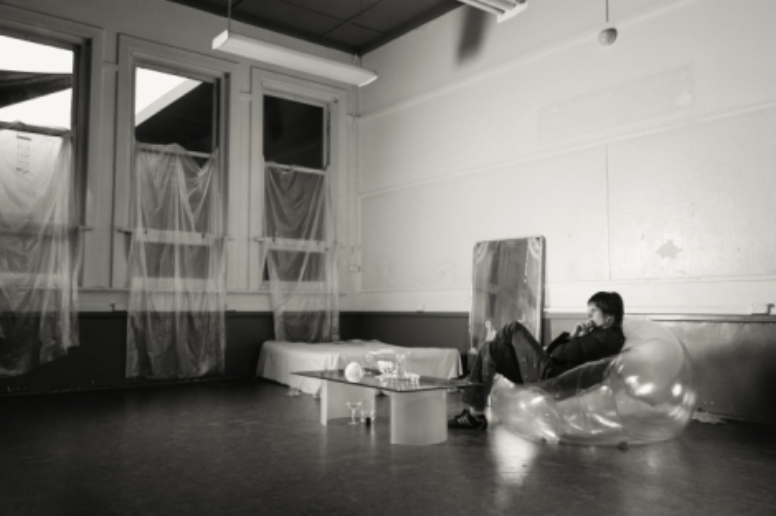
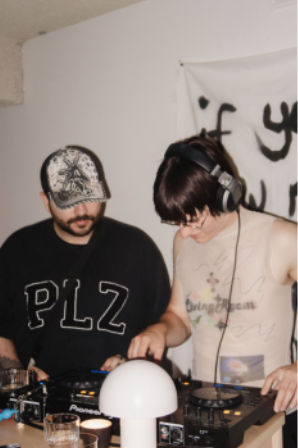
E: Yeah, it’s been huge for me. I shopped around at a few different studio spaces, but I really loved the sense of community I got here. Being here has done so much for me, not just with having a studio outside of home that I go to and work. You can find that in lots of places, but specifically the way in which everybody here supports each other. Like I’ve had so many days I’ve come in and have been working on something and have been struggling for inspiration or something and what I am able to do is just look at other people’s work around the space, either photos, paintings, music. If I get stuck with an idea, then I can bounce off other people’s work here at The Mill. Like, what sound do I think conveys this thing in your photo? And that inspiration will take me somewhere else.
S: Do you feel like already being here for the past few weeks, it's kind of shaped how you're looking at your projects?
E: Yeah, I think especially having a lot of visual artists in the space has been really inspiring, and just people working across lots of different mediums. Like, even looking at Nick's work, his stuff is so inspiring to me because it’s about repurposing the form of objects. I love the practice of recontextualisation. When I look at their works, I’m like, oh, how can I recreate this sonically? So, that’s been really good for me. But then also to have the support of the space and access to the photography studio, it gives me comfort to know that like, when it comes time to release the EP and I need to do shoots and get things ready, there’s resources here and the team is so welcoming and invested.
S: What is something that you have learned through art that has informed you on a personal life outside of art?
E: It’s better to be happy than right. When I look at some of my favourite songs ever, or songs that are just really good, the mixing is by industry standards wrong. Like there are things that are far too loud, that jump out. But they still are so good. Because it’s more about feeling than being objectively right. And I think that applies not to just art, but when I think in terms of interpersonal relationships. Like I used to be very logically brained, like, here’s what’s right and what’s wrong. But when dealing with people, it’s all just emotions. And usually the logic comes after. Like we use logic to justify what we’re feeling. I think mixing has taught me a lot in this regard. I’m not a great mixer, but mixing has informed how I speak and interact with people. It’s taught me to focus on what is being felt, and that’s what’s going to change and bring people together.
S: What do you love the most about being a multidisciplinary artist? And do you feel like music is the core of everything and everything else kind of inspires and fuels it?
E: I think music is the main one because it’s what I’ve been doing for the longest. I tried to learn to draw for a year and I was doing daily practices. By the end of the year, I was still like, I can’t draw a tissue box. It was terrible. But being here at The Mill, especially now, makes me feel a lot more empowered to explore different mediums. Even just yesterday, talking with one of the photographers upstairs about a collaborative project and being like, how can we meet our mediums together? I really like that everything seems to inform each other.
Words: Sophie Zodrow